



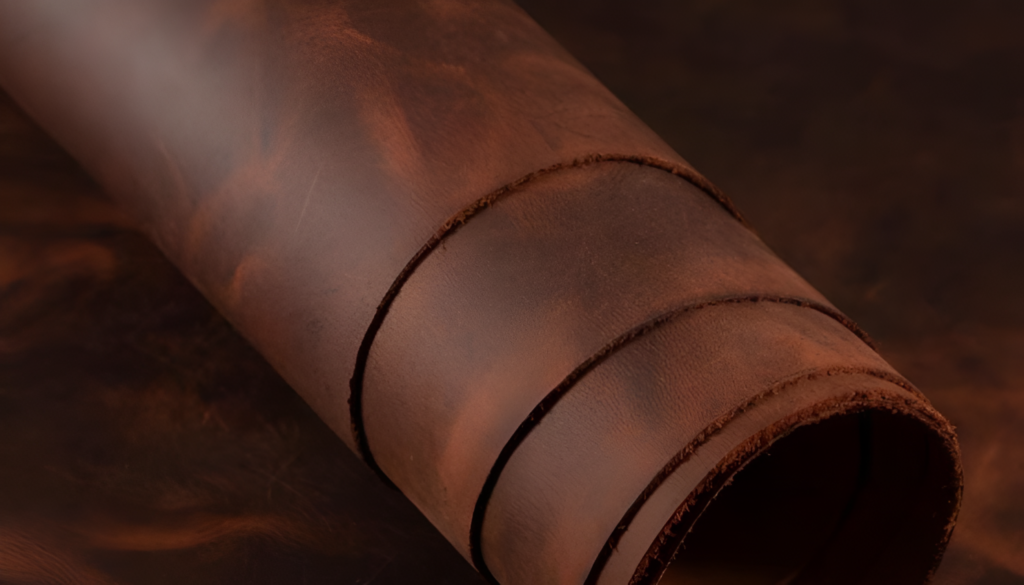
What Patina Actually Means (And What It Doesn’t)
Before exploring why some wallets develop patina, and others don’t, it’s important to define the term properly.
Patina is not simply worn. It is not cracking, peeling, or surface deterioration. True patina refers to gradual, cohesive changes in colour, texture, and surface character that occur as leather interacts with its environment and with the person using it.
In a wallet, patina typically involves:
- Gradual darkening of colour
- Smoothing of the grain from handling
- Subtle sheen developing on high-contact areas
- Blending of marks rather than accumulation of damage
Patina is a process, not a flaw. But it only occurs when the leather is capable of responding to use at a fibre level rather than merely losing its surface finish.
Leather Patina Explained at a Fibre Level
Leather patina is often described in visual terms, darkening colour, smoother texture, visible character, but those changes are only the surface expression of what is happening inside the leather itself. True patina is the result of gradual, cumulative changes within the leather’s fibre structure rather than damage to its outer layer.
Leather is made primarily of collagen fibres arranged in a dense, three-dimensional network. These fibres vary in thickness, orientation, and density depending on the part of the hide from which the leather originates and how it has been processed. In high-quality leather, especially full-grain leather, this network remains largely intact, allowing the leather to respond dynamically to use.
As a wallet is handled, oils from the skin migrate into the leather. These oils do not sit only on the surface; they are absorbed into the fibre network. Over time, they alter how light interacts with the fibres, creating a deeper, richer colour. This is one of the key reasons leather darkens gradually rather than suddenly when patina forms.
Friction also plays a crucial role. Repeated handling smooths the microscopic peaks of the grain layer. Instead of wearing away material, this smoothing compresses and aligns fibres at the surface, producing a subtle sheen. This is why high-contact areas of a wallet, such as edges, folds, and corners, often appear glossier as patina develops.
Movement and pressure also affect the patina. When leather bends or is compressed, the fibres shift slightly against one another. In oil-treated leather, internal oils move with this motion, redistributing colour and creating tonal variation. In untreated leather, the movement encourages fibres to relax and settle into new positions, permanently recording stress patterns in the form of creases and darkened lines.
Light exposure contributes through oxidation. Natural compounds in the leather react slowly with oxygen and UV light, deepening colour over time. This process happens unevenly depending on exposure, which is why areas shielded by folds or pockets may age differently from exposed surfaces.
Crucially, patina requires access to the fibre network. When leather is sealed with heavy pigments or plastic-like finishes, oils, friction, and light cannot interact effectively with the fibres. In those cases, the surface may wear or crack, but the true patina does not form because the underlying structure remains unchanged.
In essence, the leather patina is the visible record of fibre-level adaptation. It reflects how the leather has absorbed oils, redistributed internal components, and responded to repeated movement and exposure. When these changes occur without weakening the fibre network, the result is patina, not wear, but evolution.
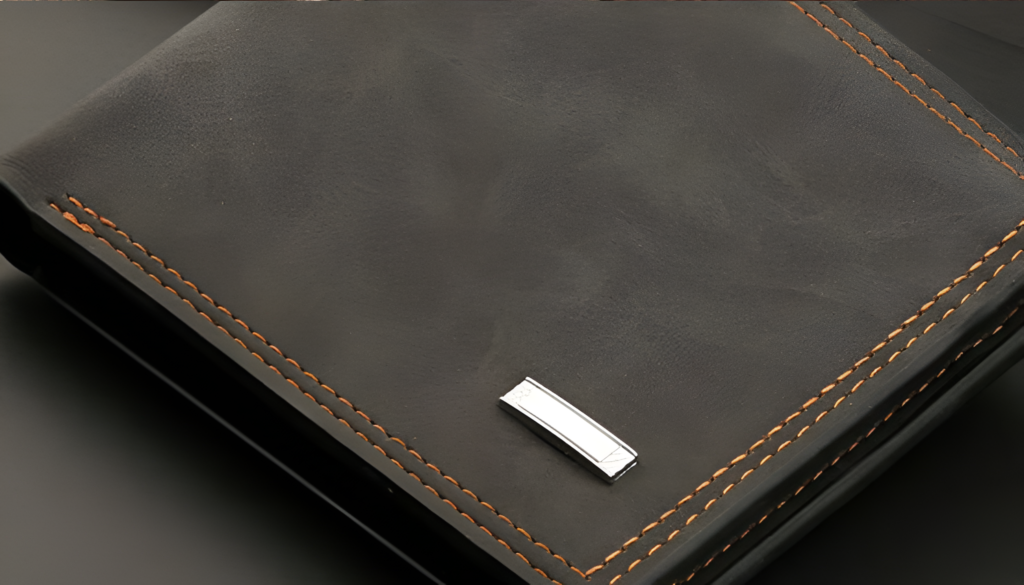
The Wallet Aging Process: Why Wallets Are a Unique Case
Wallets age differently from other leather goods.
A wallet is:
- Handled constantly
- Bent hundreds of times per day
- Pressed into pockets
- Exposed to body heat and moisture
- Subjected to friction from cards and fabric
This makes the wallet aging process particularly demanding. Leather that ages well in a bag or jacket may struggle in a wallet if it cannot handle repeated compression and folding.
Wallet patina, therefore, serves as a stress test. Only certain leathers respond positively to it.
Why Leather Darkens Over Time
One of the most visible aspects of patina is darkening. Understanding why leather darkens helps explain why some wallets change dramatically while others remain static.
Leather darkens due to several factors:
- Oxidation from exposure to air and light
- Absorption of oils from hands and skin
- Redistribution of oils already present in the leather
- Heat accelerates chemical reactions within the fibres
However, leather must be able to absorb and react for darkening to occur. If the surface is sealed with pigments, coatings, or plastic-like finishes, darkening is prevented or limited to areas where the coating breaks down.
This is why untreated and lightly finished leathers darken readily, while heavily finished leathers do not.
Full-Grain Leather and Patina Development
Full-grain leather is often associated with patina, and for good reason.
Because full-grain leather retains the entire outer layer of the hide, its fibre structure remains intact and exposed. This allows it to interact freely with its environment.
How Full-Grain Leather Develops Patina in Wallets
Full-grain leather develops patina particularly well because it retains the entire outer grain layer of the hide, the strongest and most fibrous part. This intact grain layer allows the leather to interact directly with its environment, which is essential for meaningful aging.
In a wallet, full-grain leather is exposed to constant handling. Oils from the hands gradually migrate into the leather, especially at high-contact areas such as edges, corners, folds, and card slots. These oils darken the leather slowly and unevenly at first, but over time, the contrast blends into a cohesive tone.
Repeated bending and compression play an equally important role. Each time the wallet is opened, closed, or pressed in a pocket, the fibres flex and settle. Instead of cracking, full-grain fibres compress and align, which softens the leather and smooths the grain surface. Fold lines become visible but typically stabilise rather than worsening, contributing to character without structural loss.
Light exposure accelerates this process. Even brief, repeated exposure to daylight contributes to oxidation within the grain, deepening colour and enhancing patina. Because the grain layer is intact, these changes occur evenly rather than in patches.
Scratches and marks behave differently in full-grain leather than in corrected leathers. They remain visible, but as the surrounding leather darkens and smooths, the contrast softens. Rather than disappearing completely, marks become part of the overall surface narrative, adding depth rather than distraction.
Importantly, full-grain leather develops patina gradually. It does not transform overnight. Early changes may be subtle, but over months and years, the wallet gains richness in colour, improved feel, and a sense of cohesion that cannot be replicated artificially.
In everyday wallets, this makes full-grain leather one of the most reliable materials for authentic patina, provided it is lightly finished and not sealed beneath heavy coatings. It rewards regular use, tolerates imperfection, and improves without sacrificing strength or comfort.

Oil-Treated Leather: Accelerated and Forgiving Patina
Oil-treated leathers, such as Crazy Horse or pull-up leather, develop patina differently.
These leathers are infused with oils and waxes during finishing. This changes not only how they look, but how they respond to stress.
How Oil-Treated Wallets Patinate
Oil-treated leather shows change early. Bending and rubbing cause oils to move within the leather, creating lighter and darker areas. This is often mistaken for damage, but it is actually the foundation of patina.
Over time:
- Early marks blend
- Colour variation becomes richer
- The surface develops depth rather than flatness
Oil-treated leather wallets often look “used” quickly but then stabilise into a cohesive, lived-in appearance.
This makes oil-treated leather one of the most reliable options for visible wallet patina in everyday use.
Vegetable-Tanned Leather and Dramatic Patina
Vegetable-tanned leather is famous for patina, but its behaviour is not always forgiving.
Because veg-tan leather is tanned with plant tannins and left relatively untreated, it reacts strongly to light, moisture, and oils.
How Veg-Tan Wallets Age
Vegetable-tanned wallets often:
- Darkens significantly over time
- Show marks clearly
- Develop high contrast between used and unused areas
This can produce stunning results, but it can also lead to uneven or blotchy ageing if exposure is inconsistent.
Veg-tan patina is dramatic, but it demands acceptance of unpredictability.
Top-Grain Leather: Why Patina Is Limited
Top-grain leather is often misunderstood in discussions of patina.
Because top-grain leather is sanded and finished for uniformity, much of the natural grain interaction is removed or sealed.
Why Top-Grain Wallets Rarely Patinate
In top-grain wallets:
- Surface finishes block oil absorption
- Colour remains consistent for long periods
- When wear appears, it often looks like degradation
Rather than developing patina, top-grain leather tends to lose its finish unevenly. This is wear, not patina.
This is why top-grain wallets often look unchanged for years and then decline quickly.
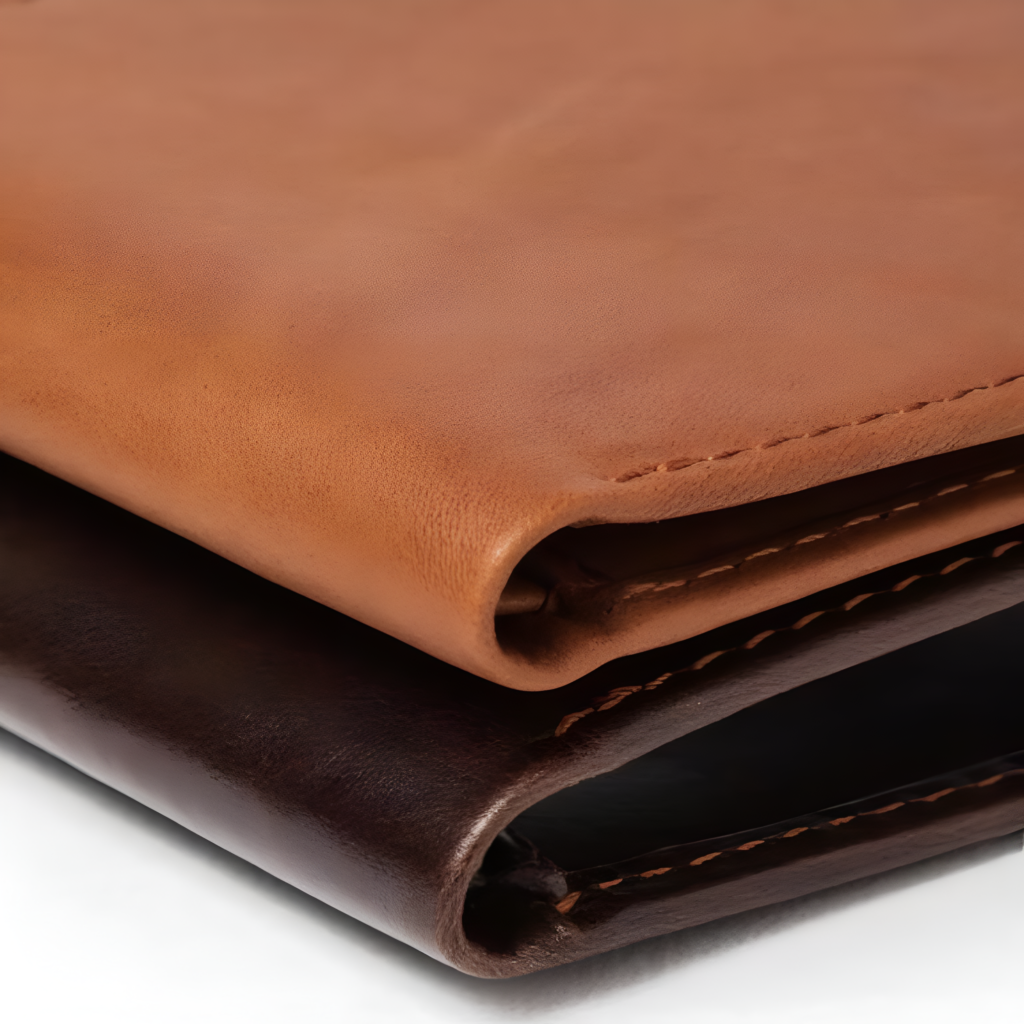
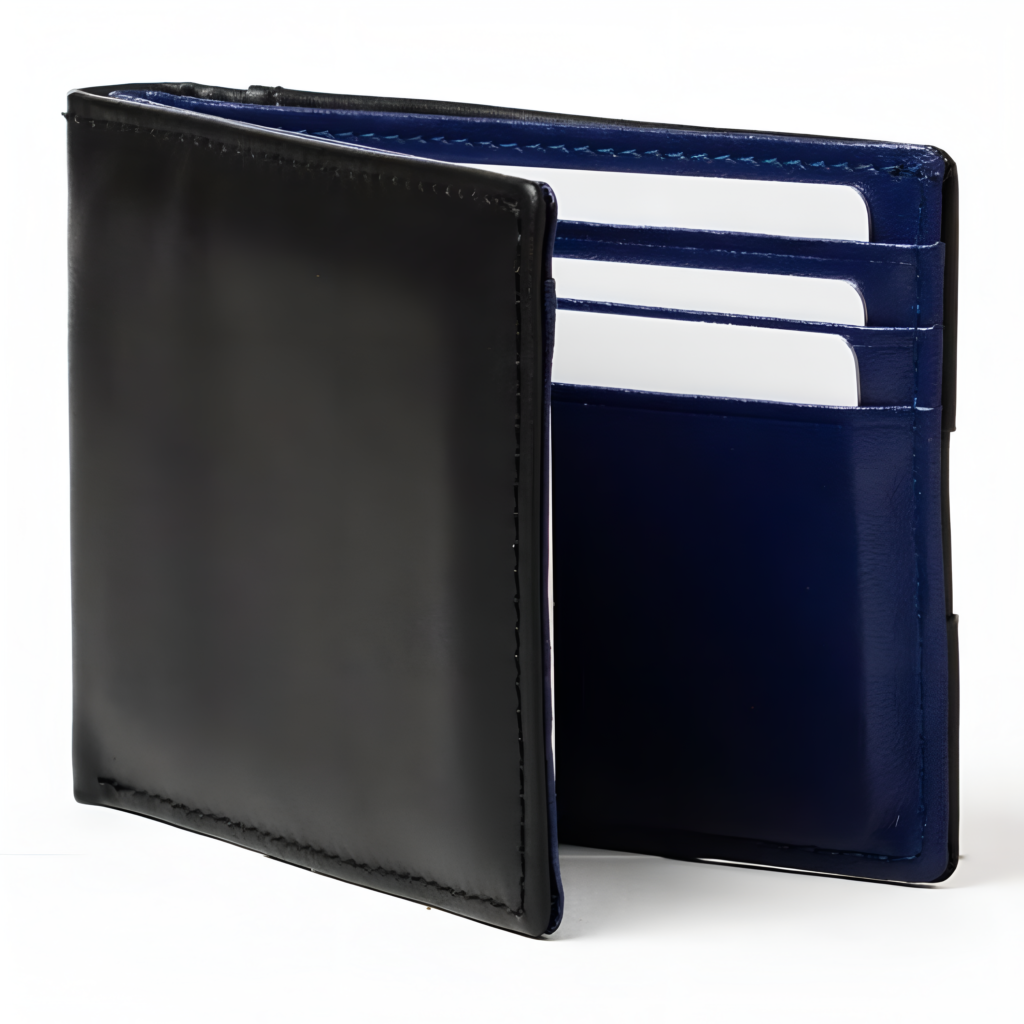
Genuine Leather and the Illusion of Patina
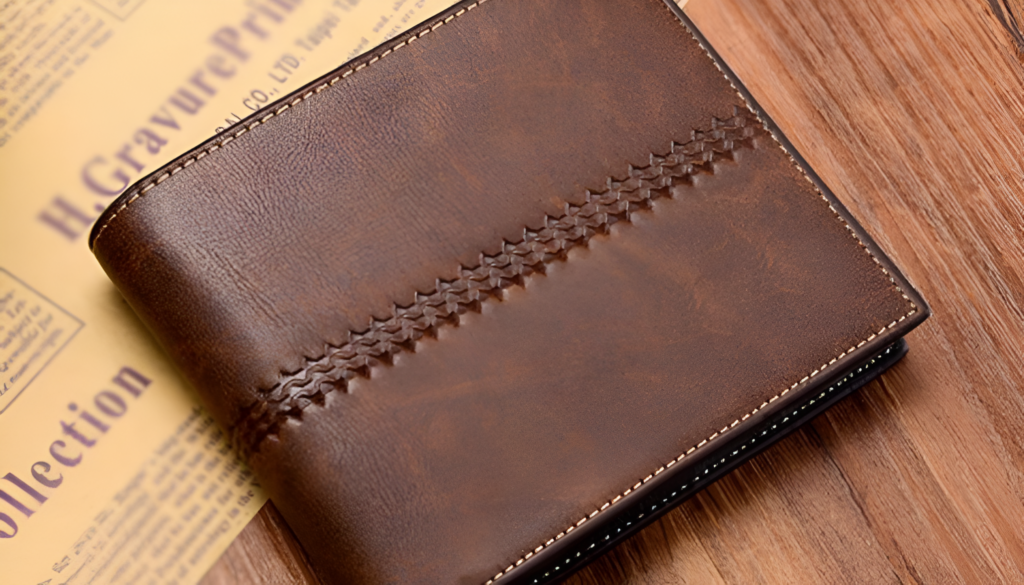
Many people expect patina from wallets labelled “genuine leather,” but this expectation is usually misplaced.
Genuine leather often refers to lower layers of the hide combined with surface treatments. These leathers lack the fibre density required for meaningful patina.
What Happens Instead of Patina
In genuine leather wallets:
- Surface coatings crack or peel
- Colour wears away rather than deepens
- Edges degrade instead of smoothing
This is not patina. It is a material breakdown.
Surface Finishes: The Biggest Barrier to Patina
One of the most important factors in whether a wallet develops patina is surface finishing.
Leathers finished with:
- Heavy pigments
- Plastic-like coatings
- Protective films
are designed to resist change. They look consistent, but they do not age organically.
Leathers finished lightly or left open:
- Absorb oils
- React to friction
- Darken naturally
Patina requires openness.
Daily Use Patterns and Patina Formation
Even the right leather will not patina evenly if the use patterns are inconsistent.
Wallets patina most visibly when:
- Carried daily
- Handled frequently
- Exposed to natural movement
A wallet left in a drawer will barely age at all.
High-contact areas (edges, folds, card slots) always patinate first. This is normal and desirable when the leather can absorb wear.
Environment and Climate Effects
Climate plays a significant role in patina.
- Warm, dry environments accelerate darkening
- Humidity increases oil absorption
- UV exposure deepens colour
Oil-treated leather handles environmental variation better. Untreated leather reacts more dramatically, for better or worse.
Maintenance and Its Role in Patina
Contrary to popular belief, excessive maintenance can prevent patina.
Over-conditioning:
- Saturates fibres
- Darkens leather prematurely
- Reduces contrast and depth
Minimal, thoughtful care supports natural aging. Patina is not something to be forced.
False Patina vs Real Patina
Not all change is patina.
Real patina:
- Develops gradually
- Enhances comfort and cohesion
- Reflects fibre-level change
False patina:
- Results from coating loss
- Appears patchy or flaky
- Signals deterioration
Understanding this difference prevents disappointment.
Why Some Wallets Never Develop Patina
Some wallets are simply not designed to patina.
They may use:
- Corrected leather
- Heavy finishes
- Synthetic coatings
These wallets prioritise appearance consistency over ageing. Expecting patina from them is unrealistic.
Choosing Leather Based on Patina Expectations
If patina matters to you, leather choice is critical.
Leathers most likely to develop satisfying wallet patina:
- Full-grain, lightly finished leather
- Oil-treated leather
- Vegetable-tanned leather (with patience)
Leathers least likely:
- Genuine leather
- Heavily coated top-grain
- Synthetic blends
Patina Is Not a Shortcut to Quality
Patina should be the result of quality, not a substitute for it.
Leather that patinates well:
- Remains strong
- Becomes more comfortable
- Ages with coherence
Leather that fails structurally does not “age characterfully,” no matter how worn it looks.
Conclusion
Some leather wallets develop patina because they are designed to. Others don’t because they are designed not to change.
Patina is not a universal outcome of leather use. It is the result of an open fibre structure, minimal surface barriers, and daily interaction. When those conditions exist, patina forms naturally and enhances both appearance and comfort.
Understanding why patina happens and why it sometimes doesn’t allows you to choose leather intentionally, rather than hoping time alone will do the work.