


What “Leather” Really Means in Wallets
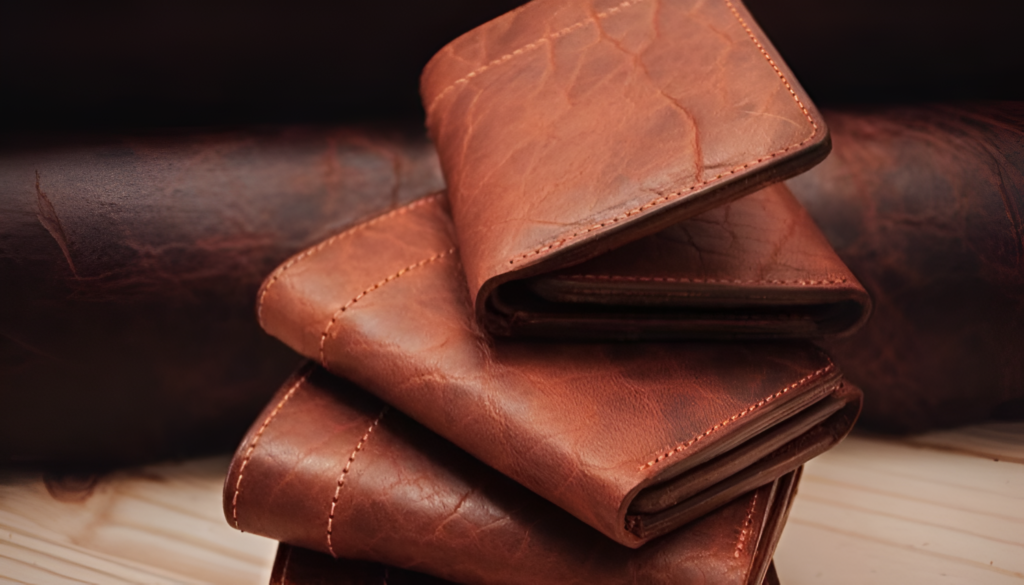
When a wallet is described simply as “leather,” it doesn’t tell you very much on its own. Leather is not a single material with a fixed level of quality. Instead, it’s a broad category that includes a wide range of grades, finishes, and treatments, all of which affect how a wallet feels, performs, and ages over time.
At its core, leather comes from animal hide, most commonly cowhide for wallets. That hide is thick and layered, and not all parts of it behave the same way. The outer layer, known as the grain, is the strongest and most durable. Beneath it are looser, more fibrous layers that are weaker and less resilient. Which layer is used plays a major role in how long a wallet lasts.
Expert Quote: “Leather is made of animal hide or skin.” Wikipedia
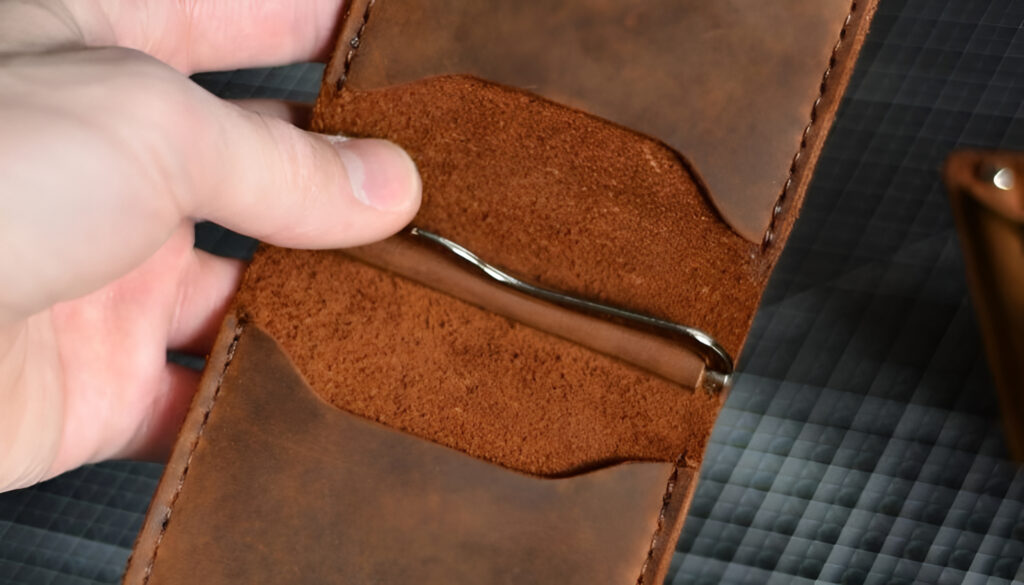
In wallet making, leather is cut very thin so it can fold easily and sit comfortably in a pocket. Because of this, the natural strength of the leather fibres becomes especially important. Higher-quality leather can be cut thin without losing integrity, while lower-grade leather often relies on surface coatings or added thickness to hold together.
The term “leather” also doesn’t explain how the hide has been treated after tanning. Tanning stabilises the hide so it doesn’t decompose, but different tanning and finishing methods change how the leather behaves. Some leathers are left close to their natural state, while others are sanded, corrected, or coated to achieve a uniform appearance. These treatments can make leather look smoother initially, but they often reduce flexibility and limit how well it ages.
Another important distinction is how the leather handles wear. Wallets are exposed to constant friction, pressure, and movement. High-quality leather responds to this by gradually softening and developing patina. Lower-quality leather tends to resist movement at first, then breaks down once the surface finish starts to wear away.
This is why two wallets can both be labelled “leather” yet feel completely different after a year of use. One may become smoother, more comfortable, and more visually appealing, while the other may crease sharply, crack at folds, or lose its surface layer.
Understanding what “leather” really means in the context of wallets helps explain why labels like full-grain, vegetable tanned, oil-treated, or genuine leather matter. They describe not just what the wallet is made from, but how it’s likely to perform in everyday life.
Full-Grain Leather Wallets
A full-grain leather wallet is made from the outermost layer of the hide, with the natural grain left intact. This is the strongest part of the leather and contains the densest fibre structure.
Expert Quote: “Full-grain leather comes from the top layer of the hide. It includes all the grain with it, hence the name full-grain leather. This type of leather retains the inherent toughness, as well as the imperfections, because there are no surface alterations or splitting.” Octane
How Full-Grain Leather Is Made
After tanning, full-grain leather is left largely untouched. The surface isn’t sanded or corrected to remove marks. Natural grain patterns, pores, and subtle imperfections remain visible.
How It Performs in a Wallet
Full-grain leather is valued for:
- High durability
- Resistance to tearing
- The ability to develop patina over time
In wallets, it starts relatively firm and gradually softens with use. Over the years, it darkens slightly and gains a smoother surface through handling.
Who It’s Best For
Full-grain leather suits men who:
- Want a long-lasting wallet
- Prefer traditional leather appearance
- Are happy with gradual, subtle ageing
Because it’s less forgiving of scratches than oil-treated leather, it tends to appeal to those who like a cleaner look.
Genuine Leather Wallets
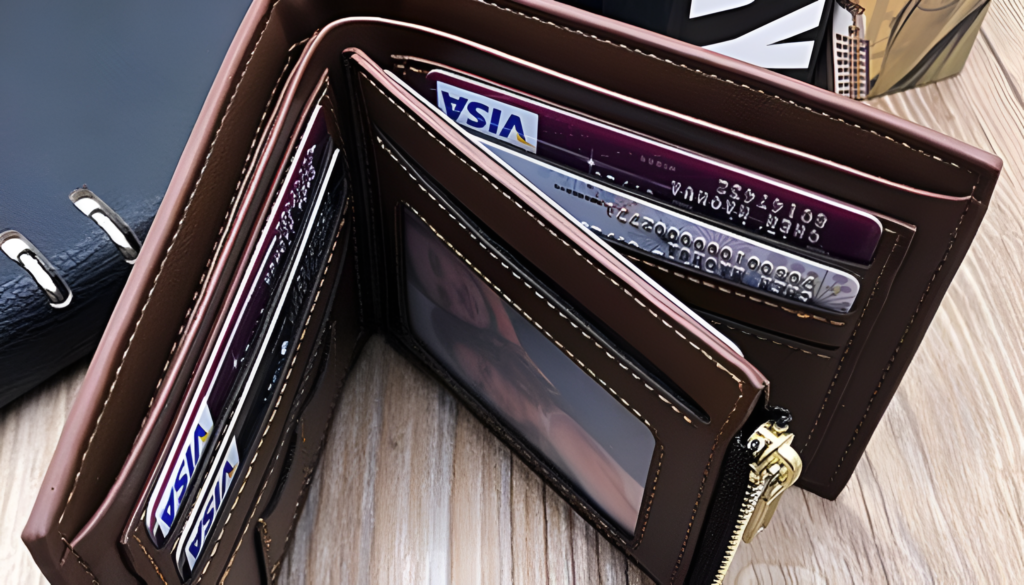
The term genuine leather causes more confusion than any other leather label. Many people assume it means “real” or “high-quality” leather. In reality, it simply means the product contains leather, not how good that leather is.
Genuine Leather Wallet Meaning
Genuine leather is typically made from lower layers of the hide after the top grain has been removed. These layers are weaker and often require surface treatments to improve appearance.
How It’s Finished
To make it suitable for wallets, genuine leather is usually:
- Sanded to create a smooth surface
- Coated or embossed with an artificial grain
- Finished with protective layers to reduce wear
How It Performs in Daily Use
While genuine leather wallets can look good when new, they often:
- Wear unevenly
- Crack or peel over time
- Lose structure as fibres break down
Who It’s Best For
Genuine leather may suit:
- Short-term use
- Occasional wallets
- Buyers prioritising cost over longevity
It’s not inherently “bad,” but it doesn’t age in the same way as higher-grade leather.
Vegetable Tanned Leather Wallets
A vegetable-tanned leather wallet is made using natural tannins from plant materials such as bark, leaves, and roots. This is one of the oldest leather tanning methods still in use.
How Vegetable Tanning Works
The tanning process is slower than modern chemical tanning. Hides are soaked in tannin-rich solutions for weeks, allowing the fibres to absorb natural compounds.
Characteristics in Wallets
Vegetable tanned leather is known for:
- Firm structure
- Lighter natural colour
- Pronounced patina development
However, it tends to be stiffer when new and softens gradually with use.
Strengths and Trade-Offs
In wallets, vegetable-tanned leather:
- Holds shape well
- Develops rich colour changes
- Can feel rigid initially
It’s also more sensitive to moisture and stains, especially early on.
Who It’s Best For
This type of leather suits men who:
- Appreciate traditional craftsmanship
- Like noticeable ageing and colour change
- Don’t mind a break-in period
It’s less forgiving of daily wear compared to oil-treated leather.
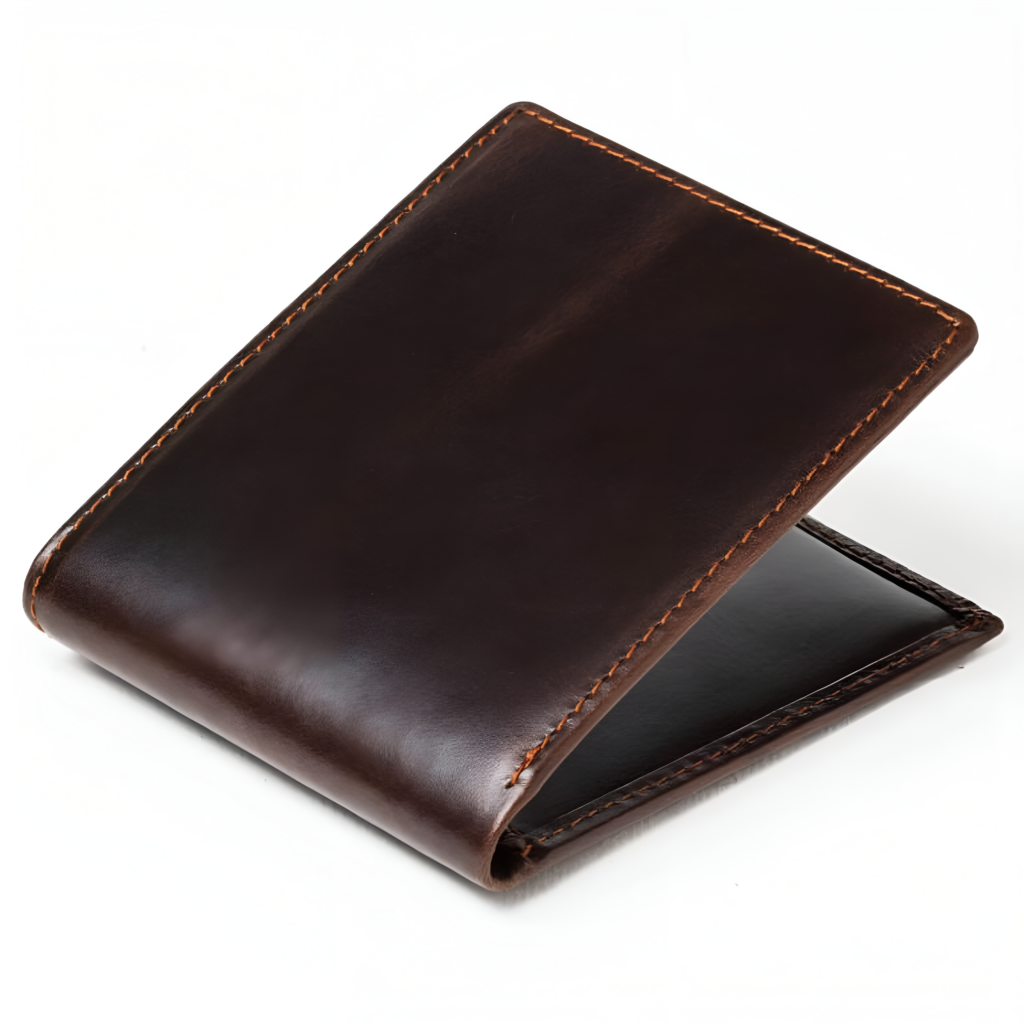
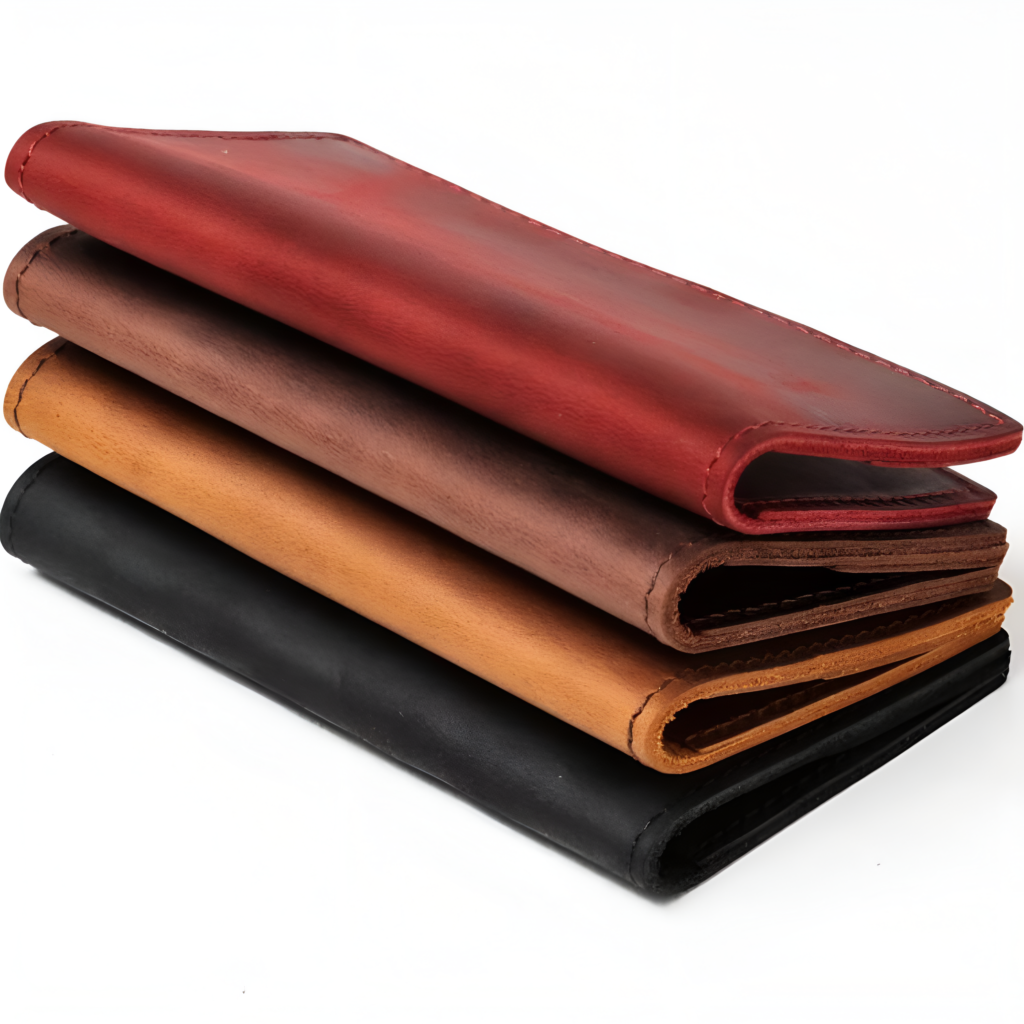
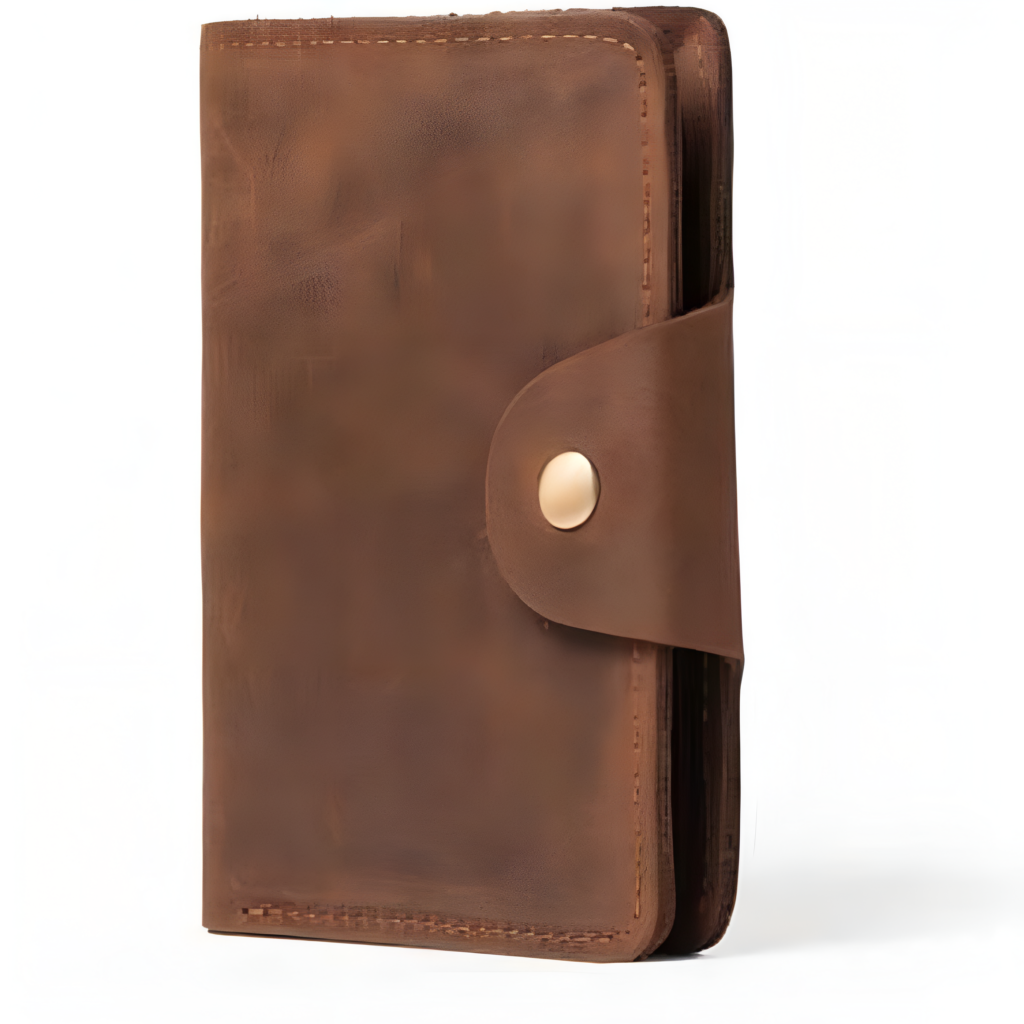
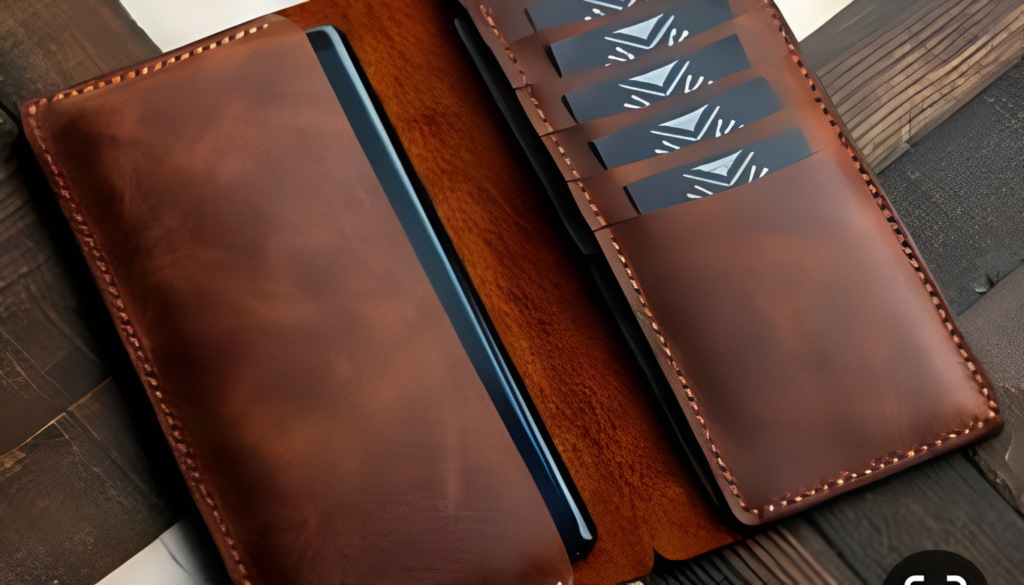
An oil-treated leather wallet is made by infusing leather with natural oils and waxes after tanning. Crazy Horse leather is one of the most well-known examples of this category.
How Oil Treatment Changes Leather
The oils penetrate the leather fibres, improving flexibility and resilience. When the leather is bent or rubbed, the oils shift, creating tonal variation on the surface.
How It Performs in Wallets
Oil-treated leather wallets are known for:
- Increased flexibility
- Resistance to drying and cracking
- A lived-in appearance that develops quickly
Scratches and marks tend to blend into the surface rather than stand out.
Who It’s Best For
Oil-treated leather suits men who:
- Use their wallet daily
- Prefer comfort and softness
- Like leather that shows character early
It’s particularly practical for front-pocket or minimalist wallets.
Other Leather Types You May Encounter
Top-Grain Leather
Top-grain leather is sanded to remove surface imperfections, then finished with a protective coating. It looks uniform but sacrifices some strength and ageing potential.
Bonded Leather
Bonded leather is made from leather scraps bonded together with adhesives. It’s rarely suitable for wallets intended to last and tends to deteriorate quickly.
How These Leather Types Compare in Real Life
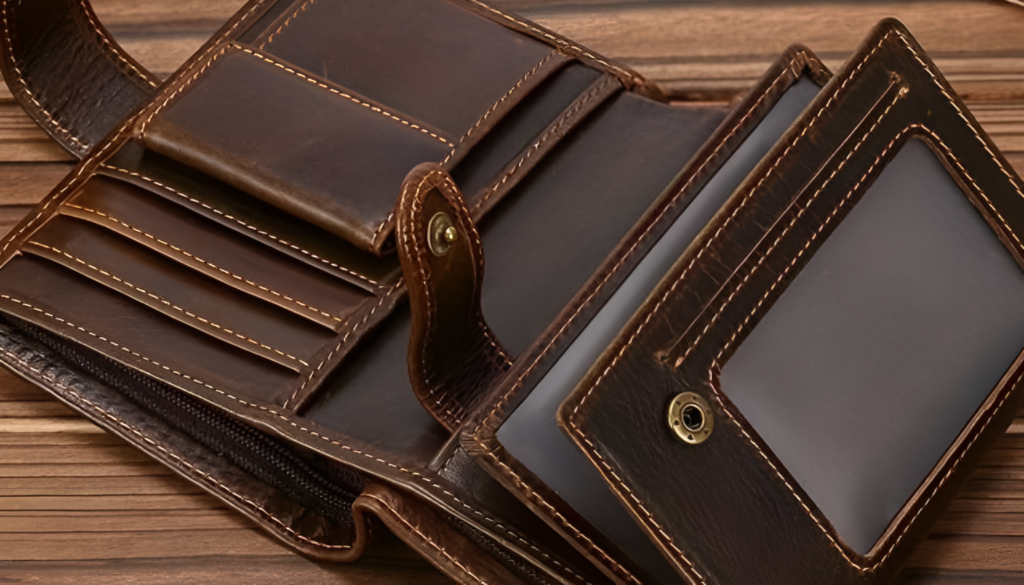
When comparing leather types for wallets, the most meaningful differences don’t show up on day one. Most leather looks good when new. The real distinction becomes clear after months or years of daily use, when handling, pocket friction, and repeated bending begin to affect the material.
In real life, leather performance can be judged across a few practical areas: how it feels in the pocket, how it reacts to wear, how it changes visually, and how long it remains structurally sound. Each common wallet leather behaves differently once those factors are taken into account.
What This Means in Everyday Use
A full-grain leather wallet tends to start firmer but grows more comfortable with time. It ages gradually and evenly, making it a good choice for men who want a traditional look that doesn’t change too quickly.
Vegetable-tanned leather has one of the most noticeable ageing processes. It begins quite stiff and light in colour, then darkens significantly through handling and exposure. This can be rewarding for those who enjoy visible transformation, but it also requires more care, especially in the early months.
Oil-treated leather, including Crazy Horse leather, adapts the fastest to daily life. It’s flexible from the start, comfortable in pockets, and forgiving of scratches. Marks that would look like damage on other leathers tend to blend into the surface, giving the wallet a cohesive, lived-in appearance relatively quickly.
Genuine leather performs differently. While it may feel soft when new, its fibre structure is weaker. Over time, instead of developing patina, it often shows signs of breakdown, particularly at fold lines and edges. This makes it less suitable for wallets intended for long-term daily use.
Top-grain leather sits somewhere in between. It offers a uniform appearance and reasonable durability, but sacrifices some aging character due to surface correction. It’s often chosen by those who prefer a consistent look rather than visible wear.
Why These Differences Matter More Than Labels
In real life, wallet leather is judged less by what it’s called and more by how it behaves over time. Two wallets can both be labelled “leather” yet have completely different lifespans and comfort levels depending on the leather type used.
Understanding these real-world differences helps set realistic expectations. Instead of choosing based on price or appearance alone, focusing on how a leather responds to daily use leads to better long-term satisfaction
What to Consider When Choosing Between Leather Types
When deciding which leather suits you, consider:
- How often do you use your wallet
- Where you carry it (front or back pocket)
- Whether you prefer visible ageing or consistency
- How long do you expect to keep it?
A wallet used daily benefits from flexibility and durability more than its initial appearance.
Why Many Modern Men’s Wallets Use Higher-Grade Leather
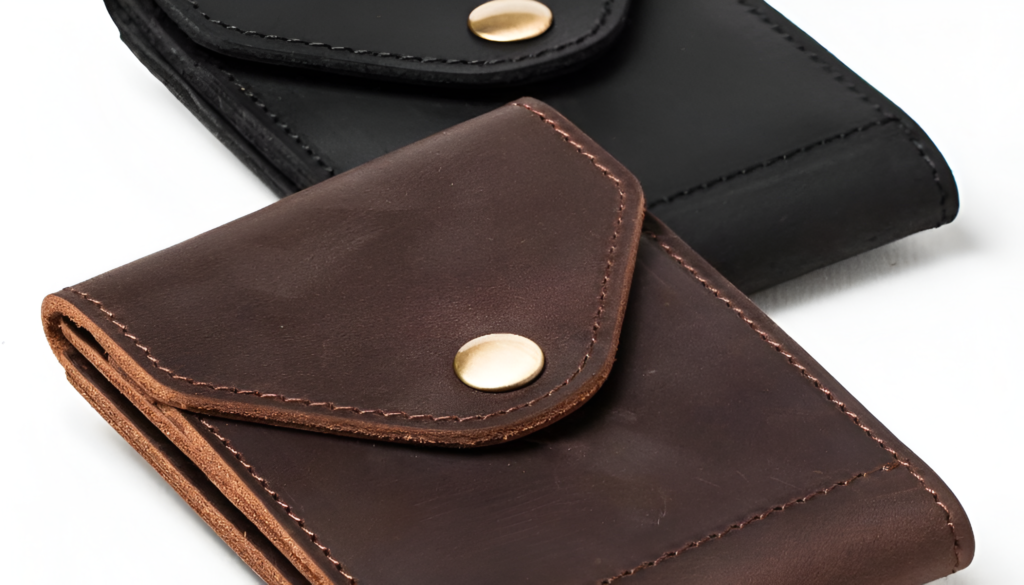
The increased use of higher-grade leather in modern men’s wallets reflects practical changes in how wallets are designed and used today. As wallet styles have shifted toward slimmer profiles, the demands placed on leather have increased. Thinner wallets leave less room for reinforcement, which means the leather itself must be strong enough to perform without relying on bulk or heavy surface treatments.
Higher-grade leathers, such as full-grain and oil-treated leather, have a denser fibre structure. This allows them to retain strength even when cut thin, making them better suited to minimalist and modern wallet designs. Lower-grade leathers often rely on thickness or surface coatings to compensate for weaker fibres, which becomes a limitation as wallets become slimmer.
Every day use has also become more demanding. Modern wallets are handled frequently throughout the day due to contactless payments, travel, and regular access to cards. This constant flexing and friction expose weaknesses in lower-quality leather quickly. Higher-grade leather adapts more effectively to repeated bending, compression from sitting, and contact with clothing, gradually softening rather than breaking down.
Attitudes toward leather ageing have changed as well. Wear is no longer seen purely as damage. Many men now expect a wallet to develop character over time. Higher-grade leather ages by developing patina, deepening in colour, and becoming smoother through handling. Lower-grade leather tends to lose its surface finish, crack, or peel once wear sets in, which shortens its usable lifespan.
Comfort has also become a more important consideration in everyday carry. Rigid or heavily coated leather resists movement and can feel uncomfortable in pockets, particularly in slimmer wallet designs. Higher-grade leather softens naturally and conforms slightly to how it is carried, reducing pressure points and making long-term daily use more comfortable.
There has also been a shift toward smaller, more controlled production runs among modern wallet brands. Higher-grade leather offers more consistent performance without requiring heavy correction or artificial finishes. This allows the natural qualities of the leather to play a larger role in both appearance and longevity.
Finally, buyer expectations have evolved. A wallet is no longer viewed as a disposable accessory but as an everyday item meant to last for years. Higher-grade leather supports this expectation by maintaining strength, improving in feel over time, and reducing the need for frequent replacement. As a result, leather choice has become central to wallet design rather than an afterthought, making higher-grade leather a practical necessity rather than a luxury.
Is One Type of Leather Always Better Than Another?
No single leather type is universally better. A vegetable-tanned leather wallet may appeal to someone who enjoys tradition and patina, while oil-treated leather suits someone who values comfort and low maintenance.
Understanding the differences allows you to choose intentionally rather than relying on labels alone.
Conclusion
Understanding the different types of leather used in men’s wallets makes it easier to choose something that fits your daily life. From full-grain leather’s strength to oil-treated leather’s flexibility, each option offers a distinct experience over time.
Rather than focusing on labels alone, paying attention to how leather behaves in real use leads to better long-term satisfaction. A well-chosen wallet doesn’t just hold cards; it becomes something you use comfortably every day.