



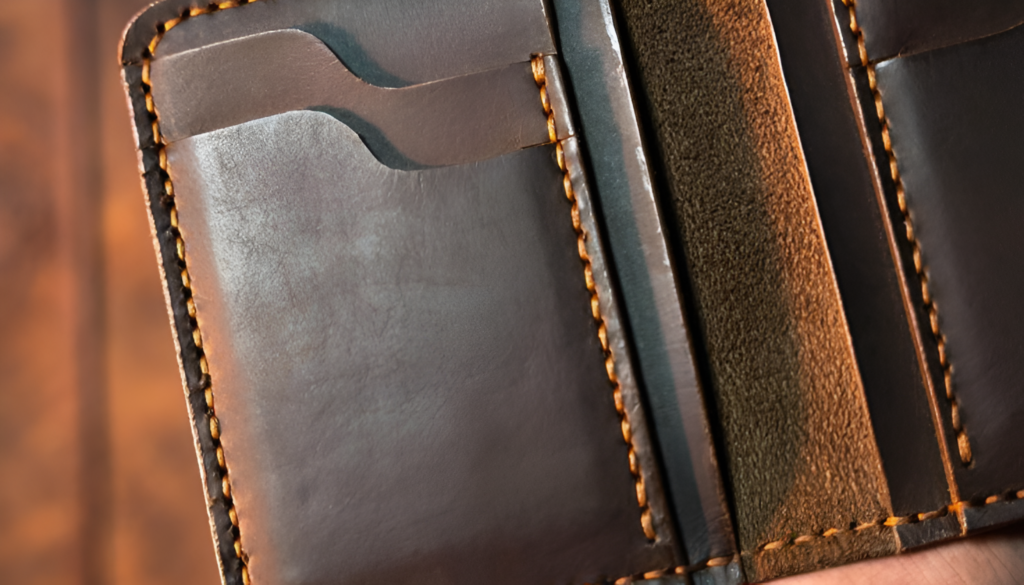
What “Oil-Treated Leather” Really Means
An oil-treated leather wallet is made from leather that has been infused with oils and waxes during or after the tanning process. These oils are worked into the leather fibres rather than applied as a surface coating. The treatment changes how the leather behaves internally, not just how it looks.
Expert Quote: “Producing oil-tanned leather involves processing it with natural oils after the initial vegetable tanning is complete. Most tanneries use fish oil, particularly cod oil, for the tanning process. The purpose is to create a remarkably smooth and flexible finish. These qualities enhance its workability, making” Octane
Oil treatment is most commonly associated with leathers such as Crazy Horse, pull-up leather, and some workwear or heritage leathers. However, oil treatment itself is not a single method. Different tanneries use different oil blends, application techniques, and saturation levels depending on the intended use of the leather.
What all oil-treated leathers share is a higher oil content within the fibre structure.
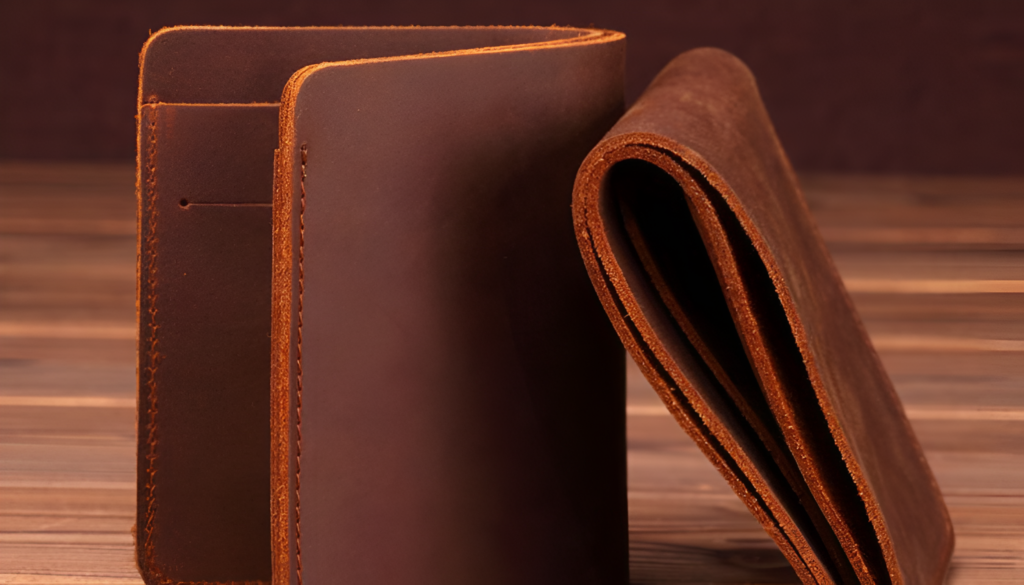
What “Untreated Leather” Means in Practice
An untreated leather wallet is not completely untreated in the literal sense. All leather must be tanned to prevent decay. However, untreated leather refers to leather that has not been heavily conditioned, oiled, or waxed after tanning.
Vegetable-tanned leather is the most common example people think of when discussing untreated leather. It is tanned using plant-based tannins and left relatively dry and firm, with minimal finishing. Some chrome-tanned leathers may also be left untreated at the finishing stage, though this is less common for wallets.
Untreated leather prioritises structure and responsiveness to external factors rather than internal lubrication.
The Structural Difference at the Fibre Level
To understand why oil-treated and untreated leather behave differently, it helps to look beneath the surface.
Leather is made of collagen fibres arranged in a dense, interwoven network. How those fibres move against one another determines flexibility, resistance to stress, and how the leather ages.
Oil-Treated Leather Fibre Behaviour
In oil-treated leather, oils and waxes sit between fibres and within fibre bundles. This reduces friction and allows fibres to slide and adjust under pressure. When the leather is bent, compressed, or rubbed, the fibres move instead of resisting.
This internal lubrication is why oil-treated leather feels flexible from the start and why it responds well to repeated movement.
Untreated Leather Fibre Behaviour
In untreated leather, fibres are more rigidly bound. There is less internal lubrication, so fibres resist movement and rely on structural strength rather than adaptability.
When untreated leather bends, stress concentrates at specific points. Over time, fibres relax, but the process is slow and uneven. This is why untreated leather often has a noticeable break-in period.
Flexibility: Immediate Comfort vs Gradual Softening
One of the most noticeable differences between an oil-treated leather wallet and an untreated leather wallet is flexibility.
Flexibility in Oil-Treated Leather Wallets
Oil-treated leather wallets are flexible almost immediately. From the first day of use, the leather bends easily at fold lines and compresses comfortably in the pocket. There is little resistance when opening or closing the wallet, and the leather adapts quickly to movement.
This flexibility doesn’t mean the leather lacks strength. It means the fibres can move without fighting each other, which reduces stress concentration.
For many men, this translates to:
- Greater comfort in front or back pockets
- Less bulk at fold points
- A wallet that feels “broken in” early on
Flexibility in Untreated Leather Wallets
Untreated leather wallets often feel stiff when new. Opening the wallet requires more force, and fold lines feel defined and firm. This stiffness is not a flaw; it reflects the leather’s structural integrity, but it can feel inconvenient in daily use.
Over time, untreated leather softens, but this happens gradually. The wallet adapts to use rather than immediately accommodating it.
Some men value this slow transformation, seeing it as part of the leather’s character. Others find the early rigidity uncomfortable, especially in slim or minimalist designs.
Durability: Resistance vs Resilience
Durability is often misunderstood as resistance to visible wear. In reality, durability is about how well a material copes with repeated stress over time.
Durability of Oil-Treated Leather Wallets
Oil-treated leather wallets are durable because they manage stress effectively. When the wallet is bent, compressed, or rubbed, the leather yields slightly and then recovers. Stress is spread across a wider area instead of concentrating at one point.
Scratches and scuffs may appear early, but they are usually superficial. They shift oils within the leather rather than damaging the fibre structure. This is why oil-treated leather often looks worn before it actually is.
Durability of Untreated Leather Wallets
Untreated leather wallets rely on structural resistance. The leather holds its shape and resists deformation. This can preserve form and crispness for a long time, but it also means stress builds up at folds and pressure points.
Over years of use, this can lead to sharp creases or stiffened areas. While the leather may remain strong, it becomes less forgiving.
Neither approach is inherently superior; they simply express durability differently.
Aging and Visual Change Over Time
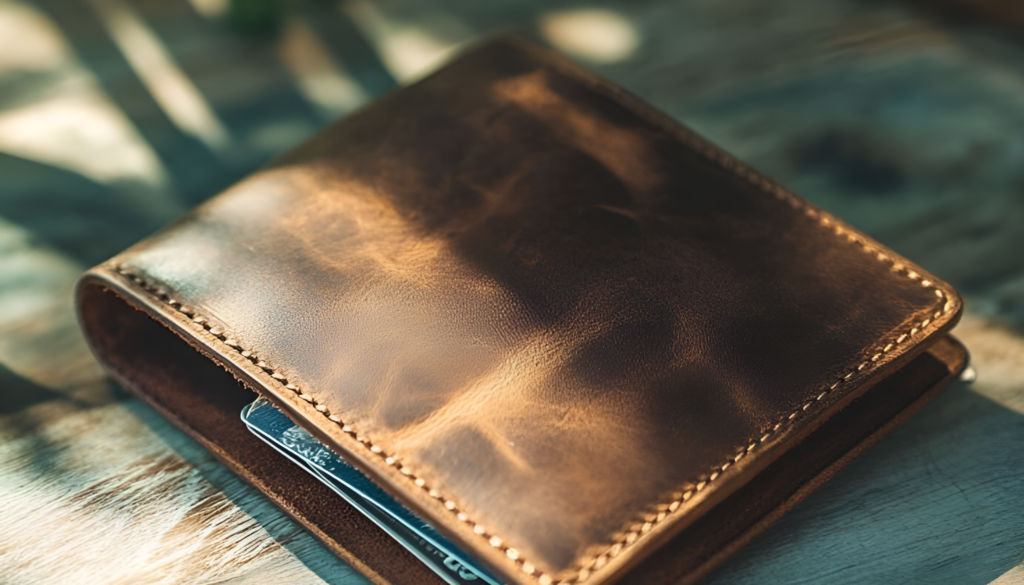
Ageing is a major reason many people choose higher-grade leather. However, oil-treated and untreated leather ages in very different ways.
How Oil-Treated Leather Ages
Oil-treated leather develops a layered, blended patina. As the wallet is handled, oils move within the leather, creating subtle shifts in tone and texture. High-contact areas become smoother and darker, while low-contact areas retain more texture.
Marks often fade or merge into the surface rather than remaining sharply defined. The wallet gains character early and then evolves gradually.
This makes oil-treated leather forgiving for everyday use.
How Untreated Leather Ages
Untreated leather records are used more literally. Exposure to light, moisture, and skin oils causes noticeable darkening. Scratches and stains remain visible and often deepen with time.
This results in dramatic patina, but it is less predictable. The wallet becomes a clear record of how it has been used, for better or worse.
Maintenance and Conditioning Expectations
Maintenance is another area where oil-treated and untreated leather diverge significantly.
Oil-Treated Leather Maintenance
Oil-treated leather wallets require relatively little maintenance. The oils already present in the leather support flexibility and surface cohesion. In many cases, simple handling is enough to keep the leather in good condition.
Occasional conditioning may be helpful if the wallet becomes dry, but over-conditioning can darken the leather excessively. Light application, infrequently, is usually sufficient.
Untreated Leather Maintenance
Untreated leather wallets are more dependent on external care. Without internal oils, the leather can dry out over time, particularly in warm or dry environments.
This is where leather conditioning oils come into play. Applied sparingly, they help replenish lost moisture and reduce stiffness. However, conditioning untreated leather requires care, as uneven application can cause blotching or irregular darkening.
Maintenance is not difficult, but it is more deliberate.
Environmental exposure affects both leather types, but not equally.
Untreated leather is more sensitive to moisture and sunlight. Water can cause staining, and UV exposure can accelerate darkening. Oil-treated leather has greater resistance due to its oil content, though it is not waterproof.
For men who live in variable climates or carry their wallet outdoors frequently, this difference can be significant.
Comfort in Everyday Carry
Comfort is often overlooked until it becomes a problem.
An oil-treated leather wallet tends to feel more comfortable in the pocket because it adapts to movement and pressure. It compresses slightly when sitting and recovers afterward.
An untreated leather wallet maintains its shape more rigidly. Some men appreciate this firmness, while others find it intrusive, especially during long hours of carrying.
For a flexible leather wallet, oil treatment usually provides a more forgiving experience.
Design Considerations and Leather Choice
Wallet design plays an important role in determining which leather performs better.
Slim wallets and minimalist designs place greater stress on leather fibres because there is less material to distribute pressure. In these designs, oil-treated leather often performs better.
Traditional bifold and trifold wallets can accommodate untreated leather more comfortably because the structure supports rigidity.
Understanding how leather interacts with design prevents mismatched expectations.
Common Misconceptions
One common misconception is that oil-treated leather is “weaker” because it feels softer. In reality, softness and weakness are not the same. Oil-treated leather can be extremely strong while remaining flexible.
Another misconception is that untreated leather is always more “authentic.” Authenticity depends on purpose, not just process.
Is Oil-Treated Leather Always Better?
Oil-treated leather is often described as an upgrade, but “better” only has meaning when it is tied to a specific use case. In wallets, the advantages of oil treatment are real, but they are not universal. Whether oil-treated leather is the better choice depends on how a wallet is used, how much structure the user prefers, and how they feel about visible change over time.
From a functional standpoint, oil-treated leather excels in adaptability. The added oils allow the leather fibres to move more freely, which reduces resistance during bending and compression. This makes oil-treated wallets more comfortable from the outset and more forgiving under constant daily use. For men who open and close their wallets frequently, carry them in a pocket for long hours, or prefer slim designs, this adaptability can feel like a clear advantage.
However, that same flexibility can feel like a drawback to someone who values firmness and defined structure. Oil-treated leather does not hold crisp lines in the same way as untreated leather does. Over time, edges soften, folds relax, and the wallet conforms to use rather than maintaining its original shape. For some, this is a sign of quality and character. For others, it can feel like a loss of refinement.
There is also the matter of visual ageing. Oil-treated leather develops a blended, forgiving patina that smooths over marks and pressure points. This suits everyday use, where wear is constant and unpredictable. Untreated leather, by contrast, records wear more clearly. Scratches, stains, and darkening remain visible, creating a more literal history of use. Men who enjoy dramatic patina often find untreated leather more satisfying, even if it requires greater care.
Maintenance expectations further complicate the idea of “better.” Oil-treated leather generally requires less active conditioning because oils are already present within the leather. Untreated leather depends more on external care to prevent dryness and stiffness. That said, some users enjoy the ritual of maintaining untreated leather and accept its sensitivities as part of ownership.
In practical terms, oil-treated leather is not better in an absolute sense. It is better suited to certain lifestyles and preferences, particularly modern, high-frequency wallet use, where comfort and flexibility matter most. Untreated leather remains a strong choice for those who prioritise structure, tradition, and visible ageing over immediate comfort.
Understanding this distinction helps shift the decision away from labels and toward personal expectations. The right leather is not the one with more treatment, but the one that behaves the way you want a wallet to behave over time.
Which Leather Type Is Best For
Oil-Treated Leather Wallets Suit Men Who:
- Carry their wallet daily
- Prefer comfort and flexibility
- Want a visible character without harsh wear
- Value ease of use over rigidity
Untreated Leather Wallets Suit Men Who:
- Appreciate firm structure
- Enjoy a gradual break-in
- Want pronounced patina
- Don’t mind active maintenance
Conclusion
Oil-treated and untreated leather are not better or worse by default; they are designed to behave differently. Oil-treated leather focuses on flexibility, comfort, and resilience under constant movement, making it well-suited to modern, everyday wallet use.
Untreated leather prioritises structure, firmness, and visible ageing, appealing to those who enjoy a more traditional break-in process and dramatic patina. The right choice depends on how you use your wallet and what you value over time. When expectations match the leather’s natural behaviour, both options can deliver long-lasting performance and character without compromise.