



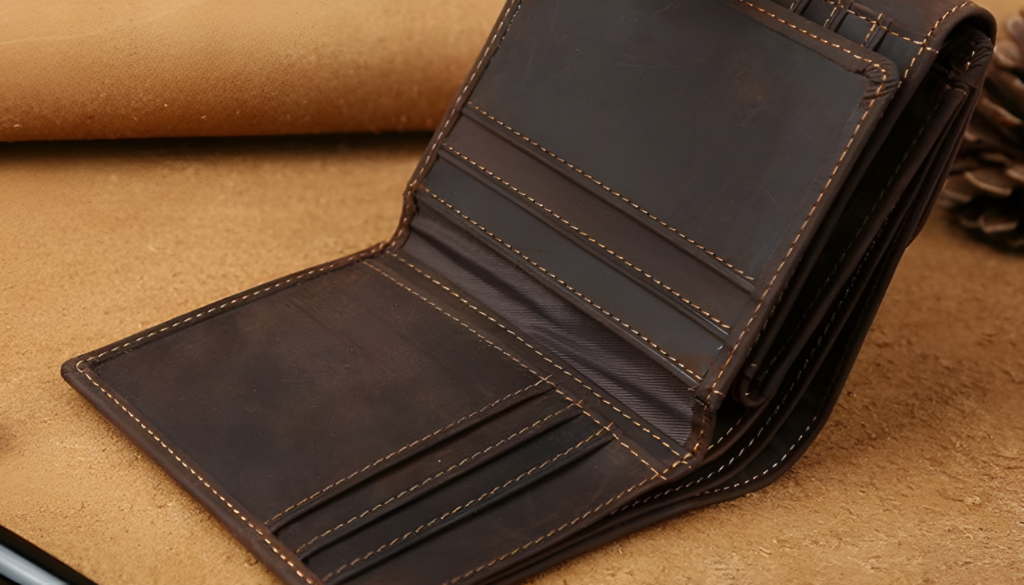
Why This Comparison Is Often Misunderstood
At a glance, Crazy Horse leather and vegetable-tanned leather are often grouped as “natural” or “traditional” options. That grouping hides an important distinction.
Vegetable tanning describes how leather is tanned. Crazy Horse leather describes how leather is finished after tanning. These are not opposing categories. In fact, Crazy Horse leather can be vegetable tanned, chrome tanned, or a combination, depending on the tannery. What makes it Crazy Horse leather is the oil treatment, not the tanning method.
So the real comparison isn’t process versus process. It’s oil-treated leather versus untreated (or minimally treated) vegetable-tanned leather, and how those choices affect wallet performance over time.
Once you separate tanning from finishing, the differences become far clearer.
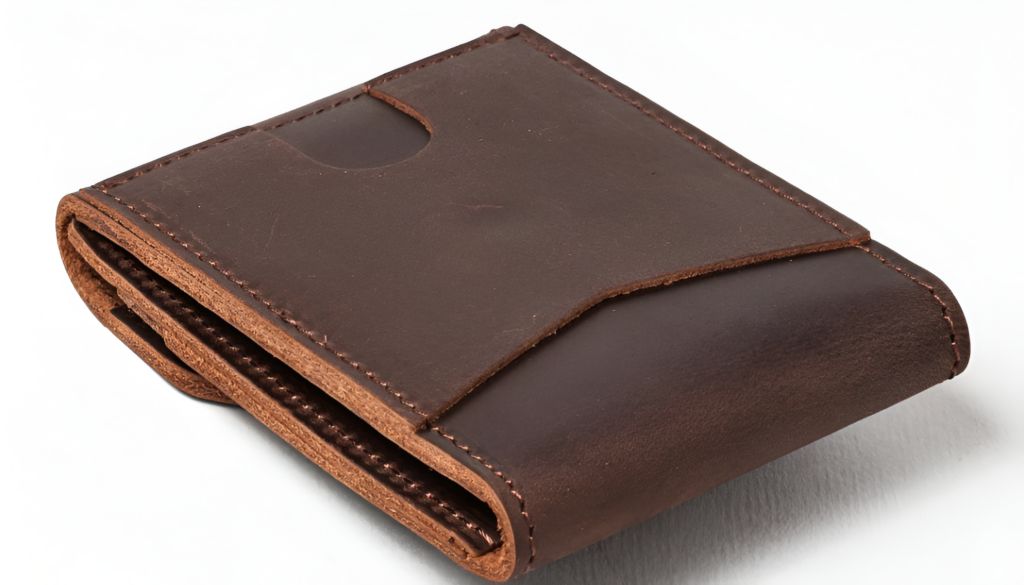
What Vegetable-Tanned Leather Means in Wallets
A vegetable-tanned leather wallet is made from leather that has been tanned using natural tannins extracted from plant matter such as tree bark, leaves, and roots. This is one of the oldest tanning methods in existence and is still used today for leather goods where structure and ageing are valued.
How Vegetable Tanning Works
Vegetable tanning is a slow process. Hides are soaked in tannin-rich solutions for weeks rather than days. During this time, the tannins bind to the collagen fibres in the hide, stabilising them and giving the leather its distinctive characteristics.
The result is leather that is:
- Firm and structured
- Light to medium in natural colour
- Highly responsive to light, oils, and handling
This tanning method does not rely on heavy surface coatings, which allows the leather to change visibly over time.
How Vegetable-Tanned Leather Behaves in Wallet Use
Vegetable-tanned leather behaves very differently from oil-treated leather once it’s turned into a wallet.
Initial Stiffness and Structure
One of the most noticeable traits of vegetable-tanned leather is stiffness, especially when new. This stiffness gives wallets a crisp, structured feel. Card slots hold their shape well. Edges stay defined. The wallet feels solid and deliberate.
However, that structure comes at the cost of flexibility. Early use can feel rigid, particularly in slimmer designs or front-pocket carry.
This is where leather wallet stiffness becomes a practical consideration rather than a theoretical one.
Break-In Period
Vegetable-tanned leather requires a break-in period. As the wallet is opened, closed, and carried, the fibres gradually relax. Over time, the leather becomes more pliable, but this process is slow and uneven.
Some men enjoy this gradual transformation. Others find the early stiffness uncomfortable or inconvenient.
What Crazy Horse Leather Is in Practical Terms
Crazy Horse leather starts with high-quality leather, often full-grain, and then undergoes a finishing process where natural oils and waxes are infused into the fibres.
This oil treatment changes how the leather behaves mechanically and visually. It increases flexibility, reduces internal friction, and creates the pull-up effect where the colour lightens when the leather is bent or rubbed.
The result is leather that looks lived-in quickly but remains structurally strong.
Oil Treated Leather vs Veg Tan: The Core Functional Difference
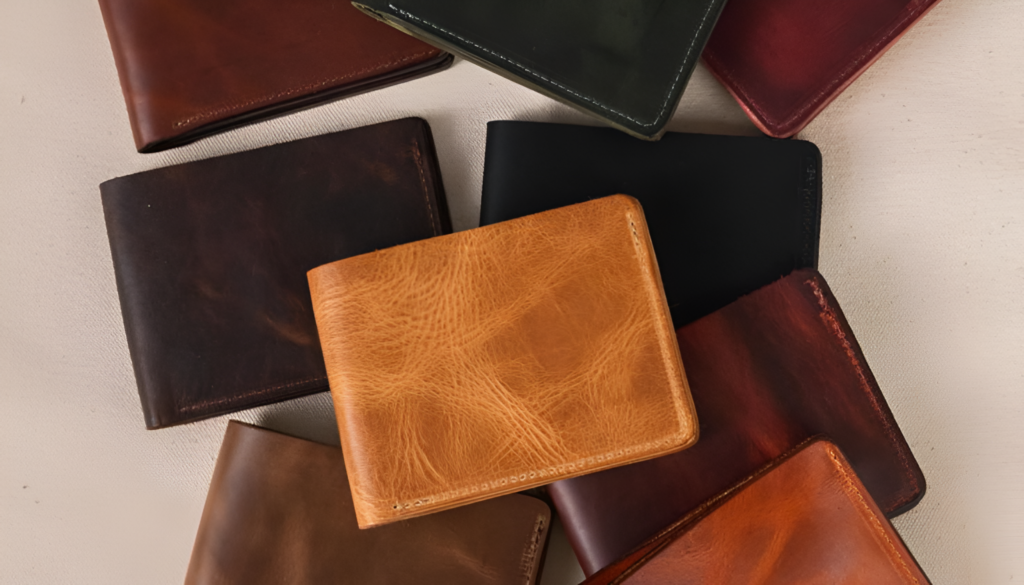
The real difference between oil-treated leather and vegetable-tanned leather becomes clear once a wallet moves from being an object you inspect to one you actually use. Both can be made from high-quality hides, but they are designed to behave differently under stress, movement, and time.
Vegetable-tanned leather relies on structure. The tanning process leaves the fibres firm and relatively dry, which allows the leather to hold precise shapes and develop dramatic patina. This firmness resists movement at first, which is why vegetable-tanned wallets often feel stiff when new. Over time, the fibres gradually relax, but they never become truly supple. Instead, the leather maintains a sense of rigidity that defines how it ages and how it feels in the pocket.
Oil-treated leather, including Crazy Horse leather, relies on adaptability. Oils and waxes infused into the fibres reduce internal friction, allowing the leather to bend and compress without fighting back. Rather than resisting movement, the leather absorbs it. This is why oil-treated wallets feel flexible early on and why fold lines soften instead of forming sharp creases.
In practical wallet use, this difference affects comfort, ageing, and durability. Vegetable-tanned leather records stress. Oil-treated leather redistributes it. Neither approach is inherently better, but they suit very different expectations.
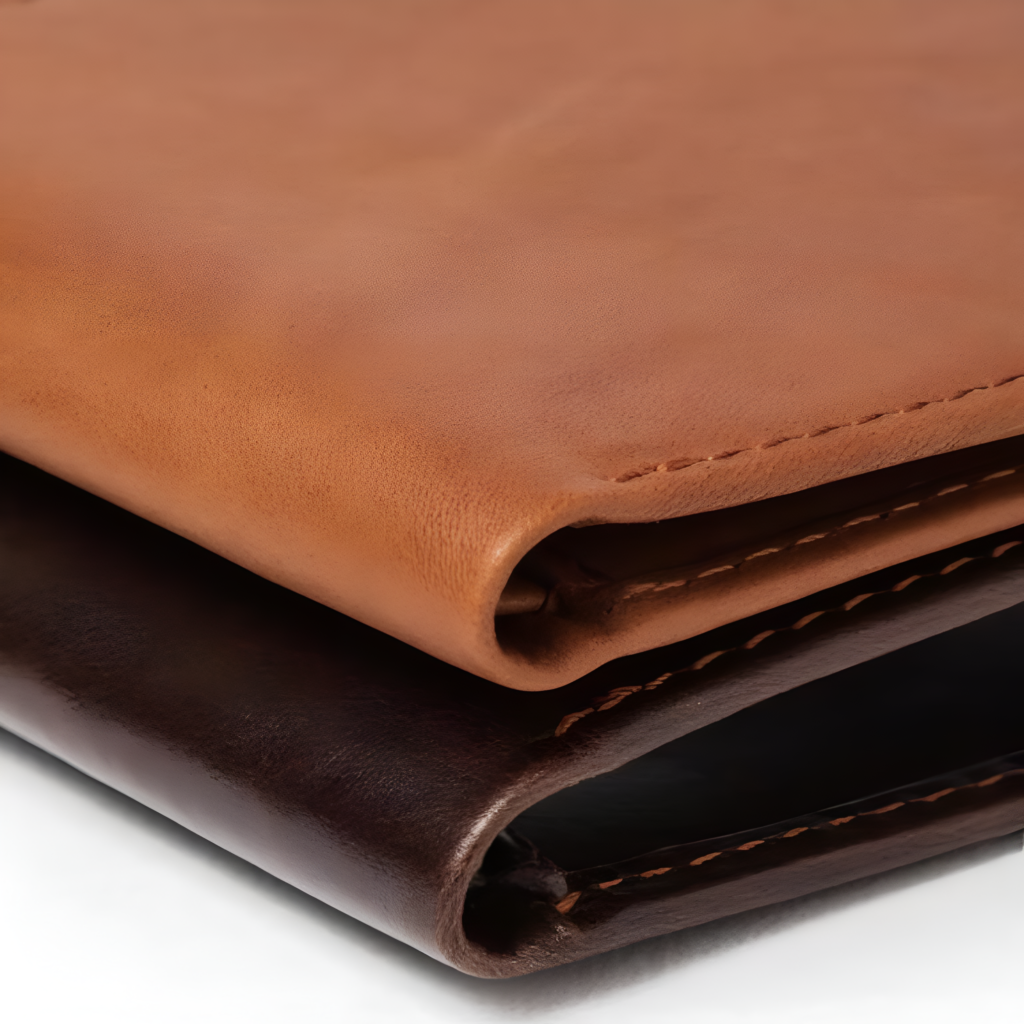
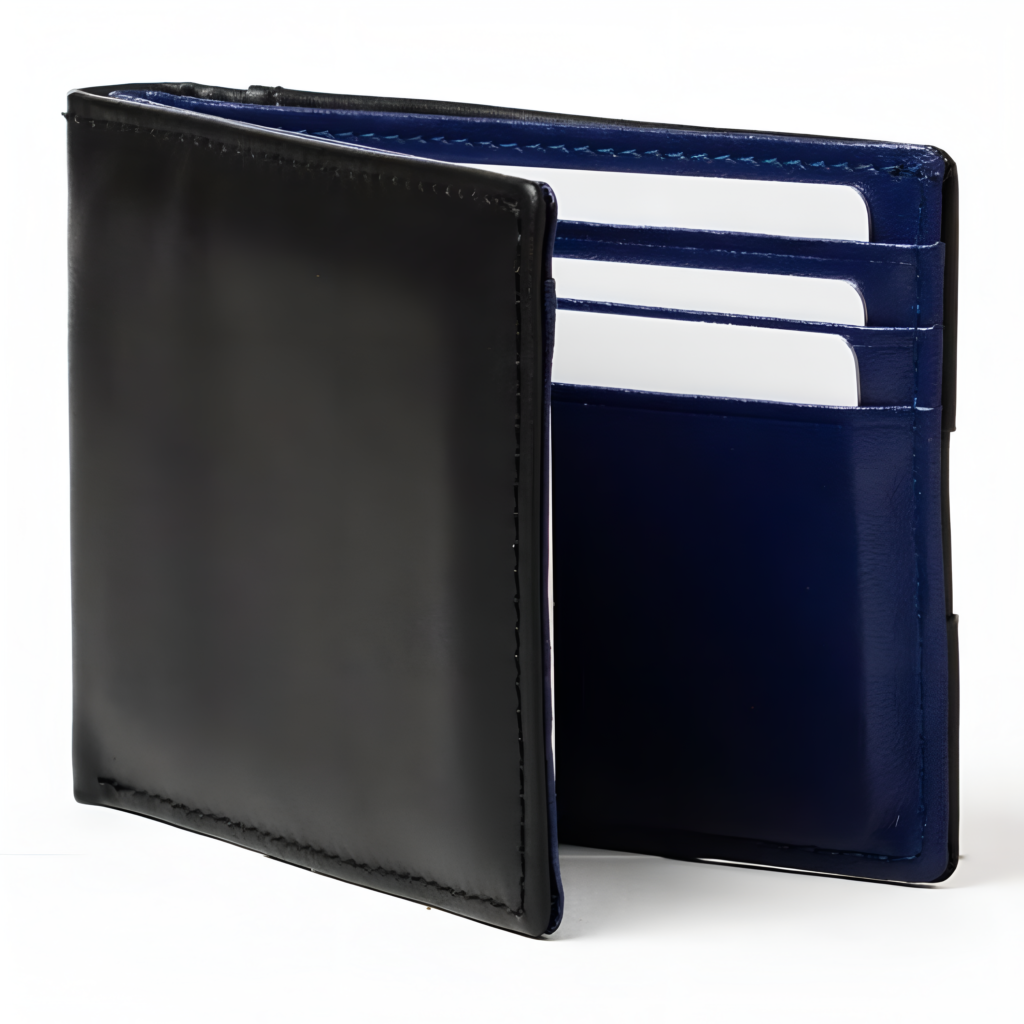
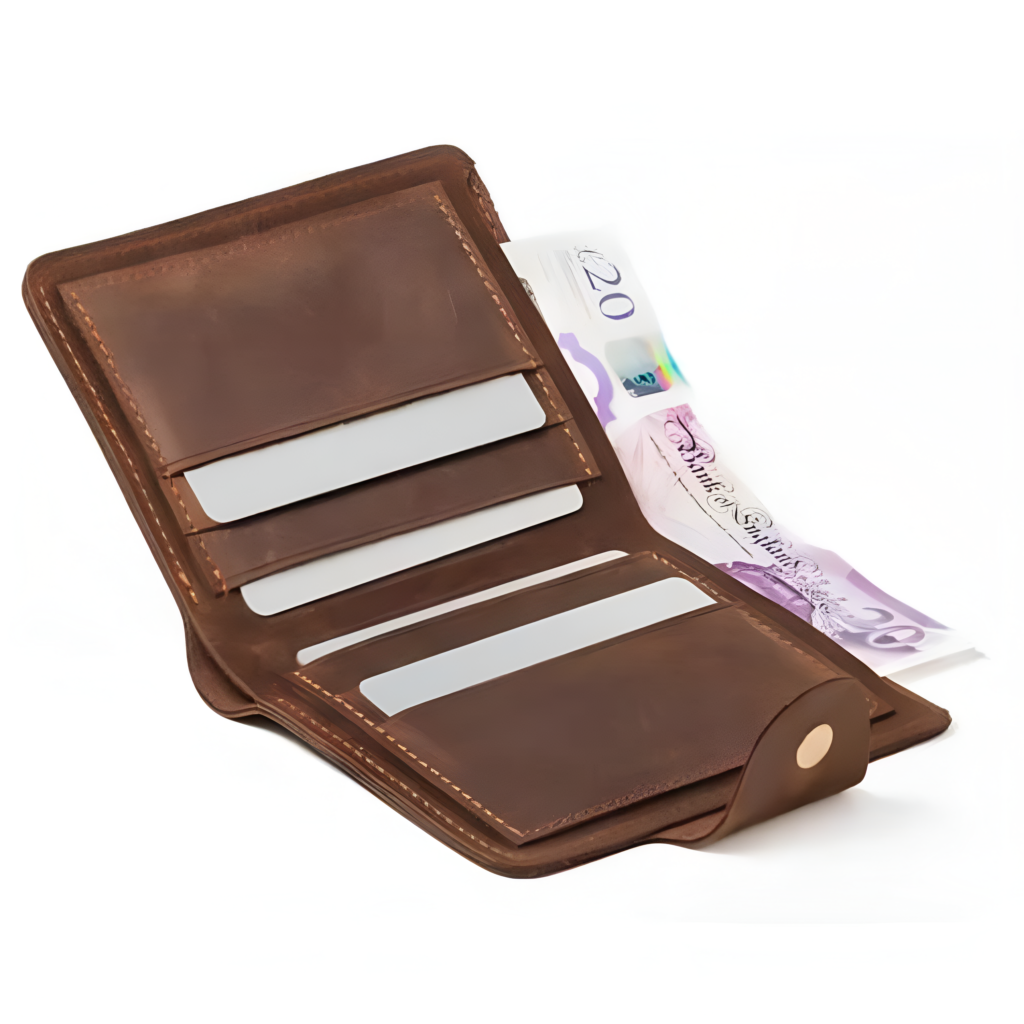
What this table highlights is that the difference is not about quality, but about intent. Vegetable-tanned leather is designed to hold form and show a clear record of use. Oil-treated leather is designed to flex, recover, and absorb wear without concentrating damage in one place.
For men who enjoy structure, rigidity, and dramatic visual ageing, vegetable-tanned leather often feels more satisfying. For those who prioritise comfort, flexibility, and forgiving wear in an everyday wallet, oil-treated leather tends to align better with real-world use.
Leather Wallet Stiffness: A Key Point of Contrast
Vegetable-Tanned Leather Stiffness in Practice
Vegetable-tanned leather is inherently stiff when new. This stiffness is not a flaw; it’s a feature. It allows the leather to hold precise shapes and develop dramatic patina over time.
In wallets, stiffness shows up in several ways:
- Folds feel firm and defined
- Opening the wallet requires more resistance
- Pocket carry can feel bulky initially
Over time, stiffness decreases, but it rarely disappears entirely. Even well-worn vegetable-tanned wallets tend to retain a sense of structure.
Crazy Horse Leather Flexibility in Practice
Flexibility is one of the defining characteristics of Crazy Horse leather, and in a wallet, it influences comfort far more than most people expect. Because the leather is oil-treated, the fibres are lubricated from within rather than stiffened by surface finishes. This allows the leather to bend smoothly instead of resisting movement.
In daily wallet use, this flexibility shows up almost immediately. When a Crazy Horse leather wallet is opened and closed repeatedly, the fold does not fight back or form sharp stress lines. Instead, the leather yields gradually, spreading tension across a wider area. Over time, this prevents the kind of rigid creasing that can make a wallet feel awkward or bulky in the pocket.
Pocket carry further highlights this behaviour. Sitting, walking, and bending apply uneven pressure to a wallet throughout the day. Crazy Horse leather responds by compressing slightly and then recovering, rather than holding pressure points. As a result, the wallet adapts to the shape of use rather than forcing the user to adapt to the wallet.
Flexibility also affects how the leather ages visually. As the wallet flexes, oils move within the leather, creating subtle tonal shifts rather than fixed marks. Areas that are handled more often become smoother and slightly darker, while high-movement areas remain supple rather than cracked or brittle.
In practical terms, Crazy Horse leather’s flexibility doesn’t mean the wallet loses structure. It means the leather remains cooperative under constant motion. For an item that is bent hundreds of times a day, that ability to move without resisting is what makes Crazy Horse leather feel comfortable and dependable in everyday use.
Durability: Strength vs Stress Management
Both leather types are durable, but they express durability differently.
Vegetable-Tanned Leather Durability
Vegetable-tanned leather is strong and resistant to tearing. Its dense fibre structure allows it to hold shape over long periods. However, because it resists movement, stress tends to concentrate at specific points, particularly fold lines.
Over time, this can result in pronounced creases. These creases are not usually structural failures, but they do define how the wallet ages visually and physically.
Crazy Horse Leather Durability
Crazy Horse leather manages stress more evenly. Oils within the fibres reduce friction, allowing movement without fibre damage. Fold lines tend to soften rather than crease sharply.
Scratches and marks appear early but rarely weaken the leather. Instead, they alter appearance without compromising strength.
In practical terms, Crazy Horse leather durability shows up as resilience rather than rigidity.
Ageing Behaviour: Dramatic Change vs Gradual Evolution
Ageing is often cited as a reason to choose higher-grade leather, but not all ageing is the same.
How Vegetable-Tanned Leather Ages
Vegetable-tanned leather develops some of the most dramatic patina of any leather type. Exposure to light, oils from the skin, and handling cause the leather to darken significantly over time.
This process can be striking:
- Light leather turns deep brown or amber
- Surface becomes glossy with handling
- Marks become permanent records of use
For men who enjoy watching a wallet transform visibly, this is a major appeal.
How Crazy Horse Leather Ages
Crazy Horse leather ages differently. Rather than darkening uniformly, it develops variation. Lighter and darker areas blend as oils move within the leather.
Scratches often fade into the surface rather than remaining distinct. The wallet looks “used” early on, but then stabilises into a cohesive patina.
The change is less dramatic but more forgiving.
Visual Consistency vs Visible History
Vegetable-tanned leather tells a clear visual story. Every mark, stain, and colour shift remains visible. This can feel deeply personal, but it can also feel unpredictable.
Crazy Horse leather tells a softer story. Use is visible, but less literal. Marks blend rather than stand out, creating an overall impression rather than a detailed record.
Which is better depends on whether you want a wallet to document your use or smooth it into character.
Comfort in Daily Carry
Comfort is often overlooked in leather discussions, yet it’s one of the most important factors in wallet satisfaction.
Vegetable-tanned leather wallets tend to feel firm in the pocket, even after breaking in. This can be reassuring for some, but uncomfortable for others, particularly in front pockets.
Crazy Horse leather wallets feel softer and more adaptive. They respond to body movement rather than resisting it. For long hours of carrying, this difference becomes significant.
Maintenance and Care Expectations
Vegetable-Tanned Leather Care
Vegetable-tanned leather is more sensitive to the environment. Moisture, stains, and light all affect it quickly. Care is not difficult, but it is more deliberate.
Owners often need to:
- Avoid water exposure
- Accept uneven darkening
- Condition carefully to avoid blotting
Care supports ageing, but it doesn’t reverse the marks.
Crazy Horse Leather Care
Crazy Horse leather requires less intervention. Oils within the leather help maintain flexibility naturally. Minor marks can often be reduced by rubbing the surface.
Over-conditioning can darken the leather excessively, but otherwise, care demands are minimal.
Wallet Design Considerations
The choice between these leathers becomes clearer when you factor in wallet design.
Slim, minimalist wallets place high stress on leather fibres. In these designs, flexibility matters more than structure. Crazy Horse leather often performs better here.
Structured bifold or trifold wallets can benefit from vegetable-tanned leather’s firmness, especially for men who prefer defined edges and shape retention.
Who Each Leather Is Best Suited For
Vegetable-Tanned Leather Is Well Suited If You:
- Enjoy firm, structured wallets
- Appreciate dramatic patina
- Don’t mind a long break-in period
- Prefer traditional leather behaviour
Crazy Horse Leather Is Well Suited If You:
- Use your wallet daily
- Prioritise comfort and flexibility
- Prefer forgiving wear patterns
- Want a visible character without rigidity
Common Misconceptions
A common misconception is that vegetable-tanned leather is always superior because it is “traditional.” Tradition does not automatically mean better for modern use.
Another misconception is that Crazy Horse leather is less refined because it marks easily. In reality, those marks reflect movement, not weakness.
Understanding what each leather is designed to do prevents disappointment.
Choosing Based on Lifestyle, Not Ideals
The most important factor in choosing between Crazy Horse leather and vegetable-tanned leather is how you live with a wallet.
If you want a wallet that evolves dramatically and retains structure, vegetable-tanned leather may be deeply satisfying.
If you want a wallet that adapts to you, softens quickly, and remains comfortable under constant use, Crazy Horse leather often aligns better with daily life.
Conclusion
The comparison between Crazy Horse leather and vegetable-tanned leather is not about quality versus compromise. It’s about how leather responds to real life.
Vegetable-tanned leather offers structure, tradition, and dramatic ageing. Crazy Horse leather offers flexibility, comfort, and resilience under daily stress. Both are legitimate, high-quality options, but they serve different preferences.
Choosing the right one becomes much easier once you stop asking which leather is “better” and start asking which one fits how you actually use a wallet.