



Why This Comparison Causes So Much Confusion
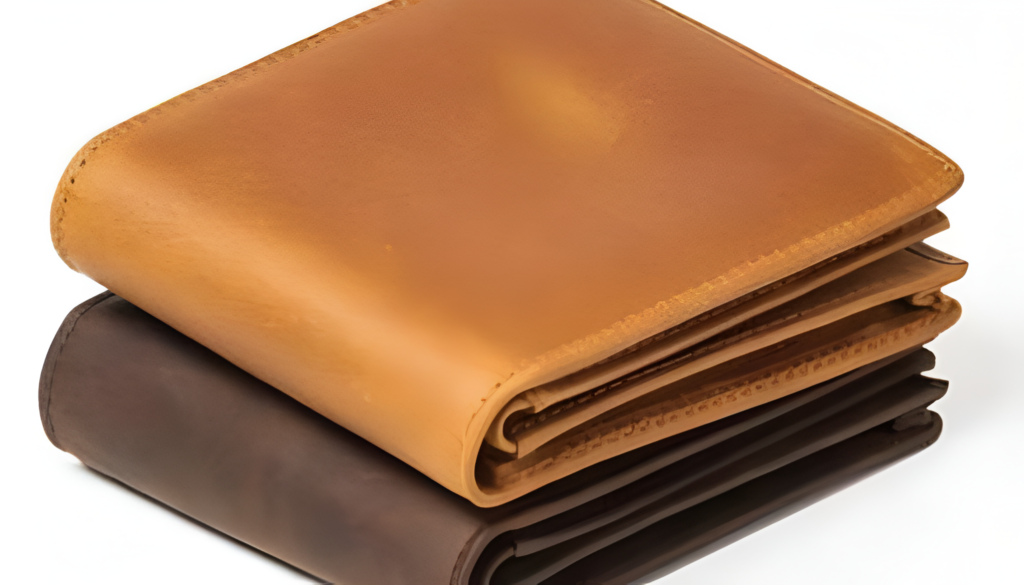
At first glance, Crazy Horse leather and full-grain leather appear to be competing categories. In reality, Crazy Horse leather is full-grain leather just treated differently.
The confusion comes from how leather terms are used in product descriptions. “Full-grain leather” describes which part of the hide is used. “Crazy Horse leather” describes how that full-grain leather is finished.
So the real comparison isn’t full-grain versus non-full-grain. It’s untreated (or minimally treated) full-grain leather versus oil-treated full-grain leather. Once this distinction is clear, the practical differences become much easier to understand.
What Full-Grain Leather Means in Wallets
A full-grain leather wallet is made from the outermost layer of the hide, with the natural grain left intact. This layer contains the strongest, most tightly packed fibres, which is why full-grain leather is considered the most durable grade.
Expert Quote: “Full-grain leather comes from the top layer of the hide. It includes all the grain with it, hence the name full-grain leather. This type of leather retains the inherent toughness, as well as the imperfections, because there are no surface alterations or splitting.” Octane
How Full-Grain Leather Is Typically Finished
In its traditional form, full-grain leather receives minimal surface treatment. The grain is not sanded or corrected, and natural markings remain visible. Depending on the tannery and use case, it may be lightly dyed or sealed, but the structure of the leather is largely unchanged.
How It Behaves in a Wallet
In wallets, untreated or lightly finished full-grain leather tends to start firm. This firmness helps the wallet hold its shape, particularly in classic bifold or trifold designs. Over time, the leather gradually softens and develops patina, but this process is slow and controlled.
Full-grain leather is often chosen for:
- Traditional wallet designs
- Men who prefer structure over flexibility
- Subtle, gradual ageing
Its strength makes it a reliable option, but that strength comes with certain trade-offs in comfort and adaptability.
What Makes Crazy Horse Leather Different
Crazy Horse leather begins as full-grain leather but undergoes an additional step: oil treatment. Natural oils and waxes are infused into the leather fibres after tanning, changing how the leather behaves under stress.
This makes Crazy Horse leather a form of oil-treated full-grain leather, rather than a separate grade.
What Oil Treatment Changes
The oil infusion increases flexibility and alters how the leather responds to pressure, bending, and friction. When the leather is moved, oils shift within the fibres, creating the characteristic pull-up effect where lighter and darker tones appear.
This treatment doesn’t weaken the leather. Instead, it allows the fibres to move more freely, which has a noticeable impact on everyday wallet use.
Structural Similarities, Functional Differences
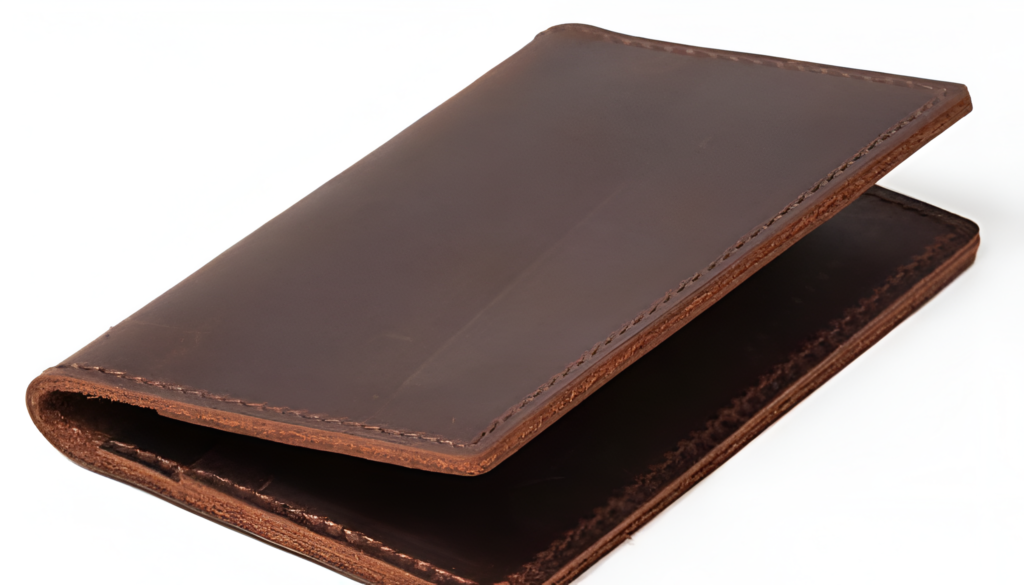
Structurally, Crazy Horse leather and untreated full-grain leather share the same foundation. Both come from the strongest part of the hide. Both are capable of long-term use. The difference lies in how stress is managed.
Untreated full-grain leather resists movement. Crazy Horse leather absorbs and adapts to it.
This difference becomes clear once a wallet is carried daily.
Leather Wallet Durability: Strength vs Adaptability
Durability is often misunderstood as resistance to damage alone. In wallets, durability also means how well the leather tolerates constant movement.
Full-Grain Leather Durability in Practice
Full-grain leather is often described as durable, but that durability shows itself in a very specific way when used in wallets. Rather than adapting quickly to movement, full-grain leather relies on the inherent strength of its fibre structure to resist wear over long periods.
Because full-grain leather retains the entire grain layer of the hide, the fibres are densely packed and tightly interwoven. This gives the leather excellent resistance to tearing, stretching, and puncturing. In a wallet, this means the material can remain structurally sound even after years of regular handling.
However, that strength comes with stiffness, especially when the leather is new. In everyday use, untreated or lightly finished full-grain leather tends to resist bending at first. When a wallet is opened and closed repeatedly, stress concentrates along fold lines rather than being absorbed evenly across the surface. Early on, this can create sharp creases where the leather consistently flexes.
Over time, those creases begin to soften as the fibres gradually relax. This process can take months or even years, depending on how often the wallet is used. Once broken in, full-grain leather becomes more flexible while retaining its underlying strength. The fold lines remain visible, but they usually stabilise rather than worsen.
Pocket pressure affects full-grain leather differently as well. Because the leather resists compression, it tends to hold its original shape longer than oil-treated leather. This is an advantage for men who prefer a wallet that stays structured, particularly in classic bifold or trifold designs. However, in slimmer or front-pocket wallets, that rigidity can feel bulky until the leather has fully adapted.
Surface wear on full-grain leather appears more slowly than on oil-treated leather. Scratches and scuffs are less immediately noticeable, but when they do occur, they tend to remain visible rather than blending into the surface. Over time, repeated handling smooths the grain and deepens the colour, creating a controlled, even patina.
In practical terms, full-grain leather durability is about longevity through resistance. The leather doesn’t give in easily, which helps preserve structure and shape over many years. For men who value firmness, defined form, and gradual ageing, this type of durability is an advantage. For those who prioritise early comfort and flexibility, the break-in period can feel like a drawback.
Understanding this distinction helps explain why full-grain leather remains a popular choice for wallets intended to look and feel largely the same for much of their lifespan, improving subtly rather than changing quickly.
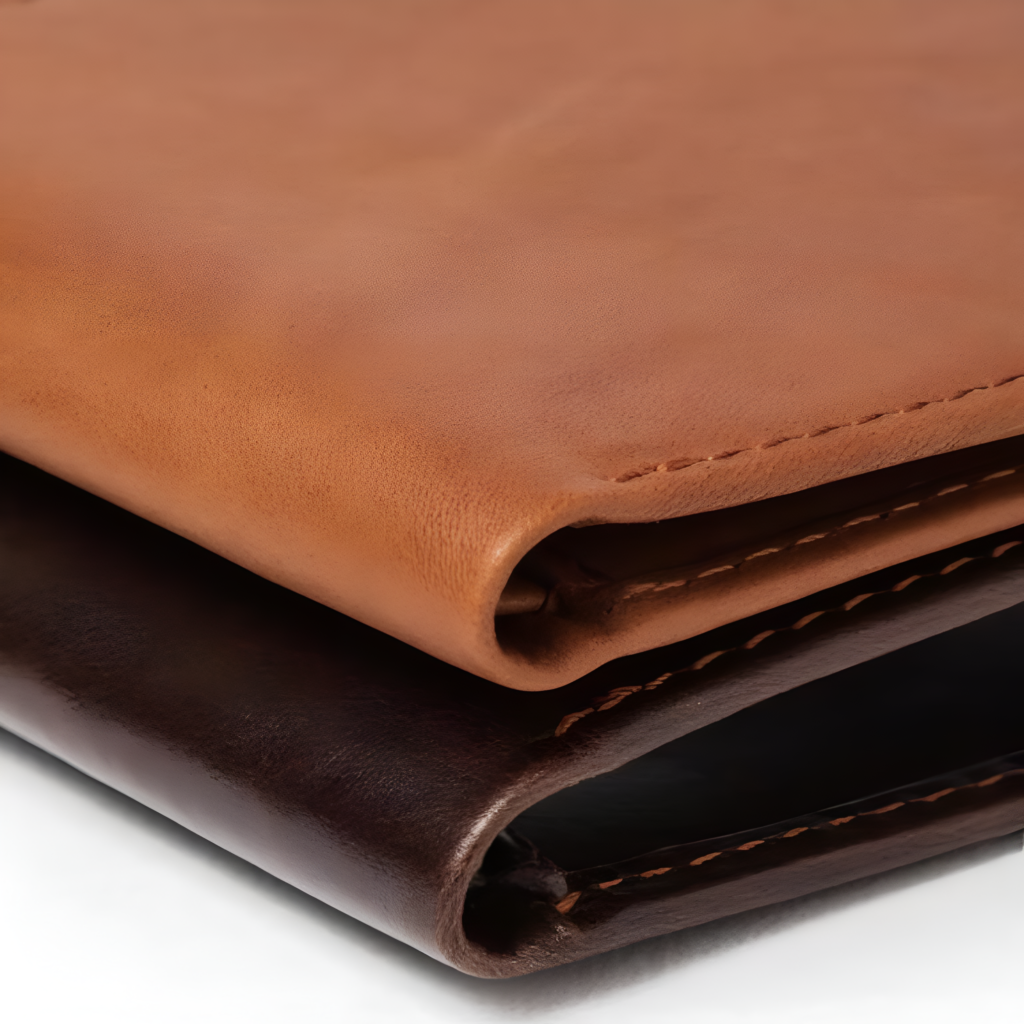
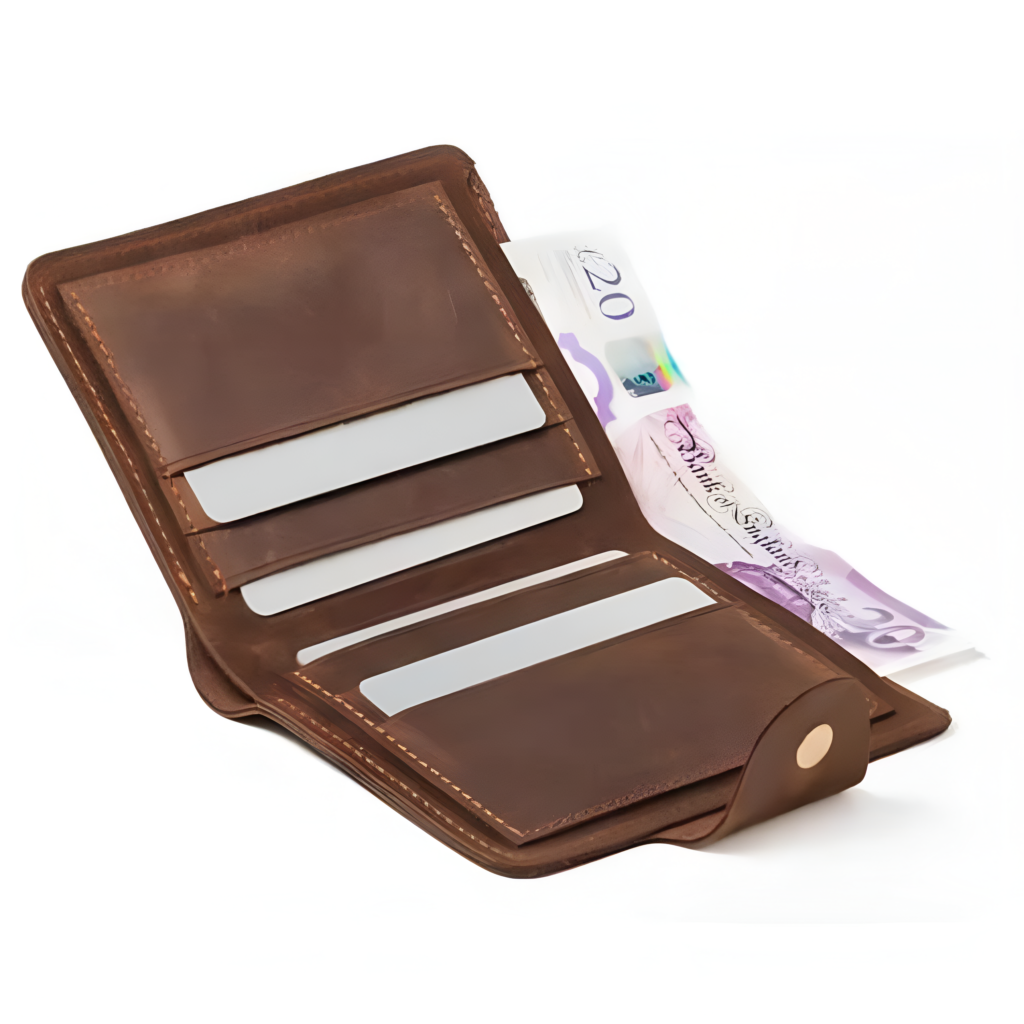
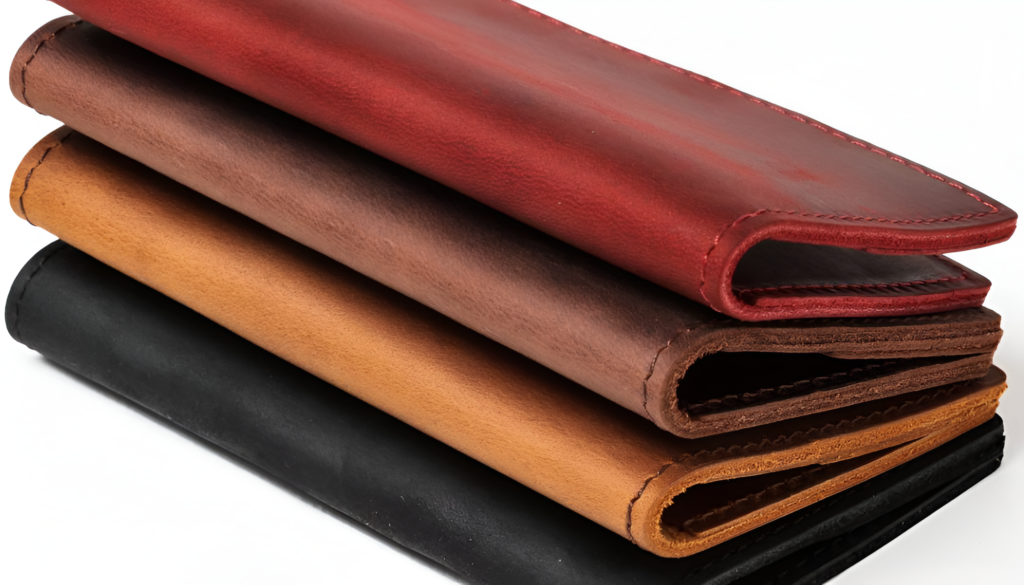
Durability in a wallet isn’t just about resisting damage; it’s about how well the material copes with constant movement, pressure, and friction over time. Crazy Horse leather is durable, not because it avoids wear, but because it is designed to manage it intelligently.
At a structural level, Crazy Horse leather starts as full-grain leather, meaning it already has the strongest possible fibre network. What changes its real-world durability is the oil treatment. The oils and waxes infused into the leather fibres reduce internal friction, allowing the fibres to move rather than resist when the leather is bent or compressed.
In everyday wallet use, this has several important effects. Fold lines don’t form as sharp creases because the leather yields gradually. When the wallet is opened and closed hundreds of times, the stress is distributed across a wider area instead of concentrating at a single point. This reduces the likelihood of cracking or splitting along the fold.
Pocket pressure is another common source of wear. Sitting, walking, or driving compresses a wallet repeatedly. Crazy Horse leather absorbs this pressure more evenly than untreated leather, maintaining flexibility instead of becoming brittle. Over time, the wallet tends to feel more comfortable without losing its structural integrity.
Surface wear behaves differently as well. Scratches, scuffs, and rub marks occur, but they rarely weaken the leather. Instead, they shift the oils within the surface layers, changing the appearance without damaging the fibre structure underneath. What might look like wear on first inspection is often just a temporary tonal change that blends into the surrounding patina.
This is why Crazy Horse leather wallets often look “used” early on but remain strong for years. The visible signs of use appear before any meaningful loss of performance. In contrast, lower-grade leather may look pristine initially, only to degrade rapidly once its surface finish fails.
In practice, Crazy Horse leather durability shows up as resilience rather than resistance. The leather bends, flexes, and adapts to daily life without losing cohesion. For a wallet that is carried every day, that ability to absorb wear rather than fight it is what allows Crazy Horse leather to last.
How Each Leather Feels in Everyday Carry
Comfort is rarely mentioned in leather descriptions, yet it plays a major role in satisfaction.
Untreated full-grain leather can feel rigid at first. In back pockets, this rigidity may be less noticeable. In front pockets, especially during long periods of sitting, it can feel bulky until the leather breaks in.
Crazy Horse leather, by contrast, feels flexible almost immediately. It conforms more readily to the body and to the contents of the wallet. Over time, it develops a lived-in feel that many men associate with comfort rather than wear.
Ageing Behaviour: Slow Refinement vs Visible Evolution
One of the most noticeable differences between these leathers is how they age.
How Full-Grain Leather Ages
Untreated full-grain leather develops patina slowly. Colour deepens gradually. The surface becomes smoother through handling. Changes are subtle and often take years to fully emerge.
This appeals to men who prefer a wallet that looks largely the same over long periods, with ageing visible only on close inspection.
How Crazy Horse Leather Ages
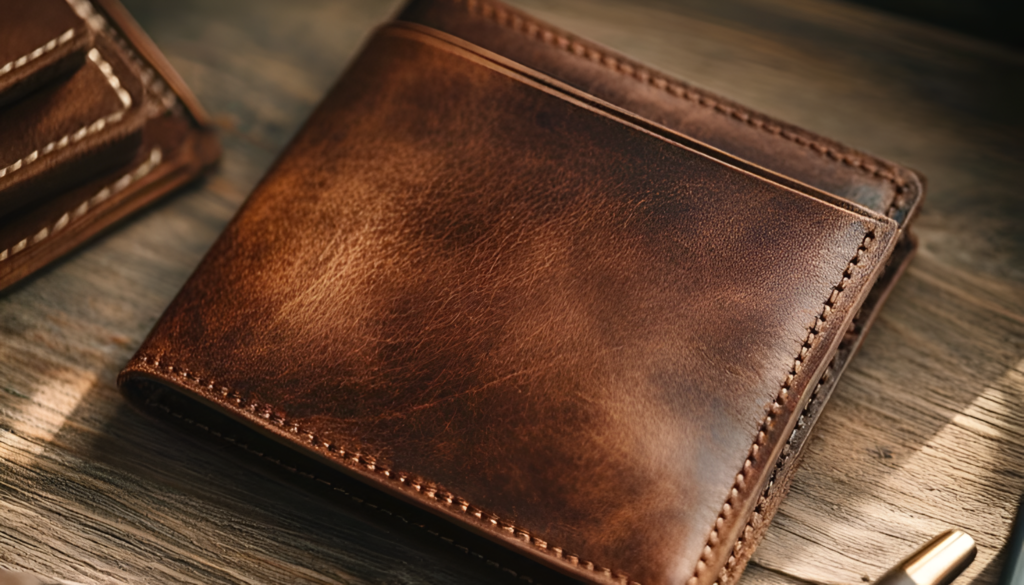
Crazy Horse leather changes more quickly and more visibly. Early scratches, pressure marks, and tonal variation appear within weeks or months. Rather than detracting from the wallet, these changes create a sense of character.
Over time, the surface becomes richer and more cohesive, with marks blending into an overall patina rather than standing out individually.
Appearance: Controlled Consistency vs Natural Character
From an aesthetic perspective, this comparison comes down to preference.
Full-grain leather wallets tend to maintain a more consistent appearance. Changes are understated and gradual.
Crazy Horse leather wallets look more individual. No two people age in the same way, because each responds to stress differently.
Neither approach is better, but misunderstanding this difference is a common source of regret.
Maintenance and Care Expectations
Both leathers are relatively low-maintenance, but they respond differently to care.
Full-grain leather benefits from occasional conditioning to prevent dryness, especially in drier climates. Care helps maintain flexibility as the leather ages.
Crazy Horse leather requires even less intervention. Because it is already oil-treated, most care happens naturally through handling. Minor marks can often be reduced simply by rubbing the surface to redistribute oils.
Over-conditioning Crazy Horse leather can darken it excessively, so restraint is important.
How Wallet Design Influences the Better Choice
Leather choice doesn’t exist in isolation. Wallet design plays a significant role.
Slim and minimalist wallets place more stress on leather fibres because there is less material to distribute pressure. In these designs, Crazy Horse leather’s flexibility often provides better long-term comfort.
Structured bifold and trifold wallets may benefit from untreated full-grain leather’s firmness, especially for men who prefer a defined shape.
Which Leather Is Better for Everyday Use?
When considering the best leather for everyday wallet use, the answer depends on how “everyday” is defined.
For frequent handling, front-pocket carry, and long hours of wear, Crazy Horse leather often aligns better with daily life.
For occasional use, formal settings, or those who prefer minimal visible change, untreated full-grain leather may be more satisfying.
Why Many Brands Offer Both Options
The fact that both leathers remain popular reflects that they serve different users rather than competing directly.
Some men want a wallet that evolves visibly and feels personal. Others want one that remains understated and structured.
Offering both allows brands to meet these differing expectations without compromising material quality.
Common Misconceptions in This Comparison
One common misconception is that Crazy Horse leather is less durable because it marks easily. In reality, those marks are surface expressions of movement, not damage.
Another is that untreated full-grain leather is always superior. While it is structurally strong, that strength doesn’t automatically translate to better everyday comfort.
Understanding what each leather is designed to do prevents these misunderstandings.
Choosing Based on Lifestyle, Not Labels
Rather than asking which leather is “better,” the more useful question is which leather fits your habits.
Choose Crazy Horse leather if you:
- Use your wallet constantly
- Carry it in a pocket for long periods.
- Like visible ageing and character
- Prefer flexibility and comfort.
Choose untreated full-grain leather if you:
- Prefer structure and firmness
- Want subtle, slow ageing.
- Use your wallet more selectively.
- Value consistency in appearance
Conclusion
The comparison between Crazy Horse leather and full-grain leather wallets is not about quality versus compromise. It’s about how the same high-quality material is adapted for different experiences.
Full-grain leather offers structure, strength, and controlled ageing. Crazy Horse leather offers flexibility, comfort, and visible character. Both are durable. Both are legitimate choices. The difference lies in how they respond to everyday life.
Choosing between them becomes far easier once you move past labels and focus on how you actually use a wallet.